2026 UK Guide: Slimline Stairlifts for Narrow Stairs
What if the very staircase that defines your home's character is the one thing making you feel like a prisoner in your own rooms? Many people living in classic UK terraces or cottages worry their hallways are simply too tight for modern mobility aids. You shouldn't have to choose between your safety and the comfort of other residents who still need to walk up and down. Finding a suitable stairlift for narrow stairs often feels like an impossible task; you might worry about blocking the path for family or feel confused by the different rail options available in 2026.
We're here to tell you that your staircase isn't a dealbreaker. This guide reveals how modern slimline technology can fit even the most restricted spaces without compromising on your comfort. You'll discover how models like the Thyssen Homeglide and Stannah 260 use tiny footprints to maintain vital walking space for everyone else. We'll walk you through the differences between curved and straight slimline rails, the benefits of professional installation, and how our simple photo-based quoting system makes starting the process entirely stress-free.
Table of Contents
Understanding the Challenges of a Narrow Staircase
Living in a home with a restricted hallway often leads to a difficult question: is my staircase simply too small? In the UK, most standard domestic stairlifts require a width of at least 700mm to 750mm. However, many older homes feature flights as narrow as 600mm. When you are looking for a stairlift for narrow stairs, the primary hurdle is encroachment. This refers to how much of the staircase width is taken up by the rail and the chair, potentially leaving very little room for other family members to walk past safely.
It's common to feel a sense of frustration or worry that your home's layout has priced you out of independence. You might fear that a lift will turn a narrow hallway into a permanent obstacle for your partner or grandchildren. Fortunately, 2026 slimline engineering has transformed these possibilities. By utilising compact stair lift mechanisms and configurations, manufacturers have reduced the folded profile of modern units to between 310mm and 380mm. This ensures that even the tightest stairs remain accessible to everyone in the house, restoring your autonomy without compromising the shared space.
Common UK Home Layouts with Narrow Stairs
UK architecture presents unique challenges for mobility installations. Victorian and Edwardian terraced houses are famous for their steep, narrow flights that often lack a landing. Cottage-style properties frequently feature winders; those triangular steps that turn sharp corners, which traditionally made fitting a lift nearly impossible. Even in modern compact apartments, hallway space is often at a premium to maximise living areas. Each of these layouts requires a specific approach to ensure the lift doesn't become a trip hazard or a structural burden.
When updating these traditional properties, many homeowners also look for ways to refresh their interior; you can learn more about Universal Blinds UK for bespoke window solutions that fit perfectly in character homes.
The Safety Implications of Tight Spaces
Safety in a confined space goes beyond just fitting the chair. We must ensure there is enough back-to-knee clearance so the user's legs don't strike the opposite wall or banister during travel. Crucially, the staircase must remain a viable escape route for other residents in an emergency. This is why professional stairlift maintenance is so vital for high-tolerance fits. A lift that is perfectly calibrated ensures that every millimetre of available space is used efficiently, keeping the mechanism running smoothly within its tight operating margins.
Key Features of Slimline Stairlifts for Compact Homes
Choosing a stairlift for narrow stairs requires a careful balance between your personal comfort and the practicalities of a shared home. While a standard seat might feel more familiar, every millimetre counts when your staircase is under 700mm wide. High-quality slimline models solve this by prioritising a compact parked footprint, ensuring the lift doesn't become a permanent obstacle for other residents. The engineering focus in 2026 has shifted towards reducing the bulk of the motor housing and the rail profile, allowing these units to sit closer to the wall than ever before.
One common concern for homeowners is whether a smaller lift means a less comfortable ride. Modern designs address this by using adjustable seat widths. You can enjoy a secure, supportive seat during travel, which then folds away to a depth of less than 400mm when you arrive at your destination. If you are worried about the financial side of these home improvements, it's helpful to look into UK government Disabled Facilities Grants, which can provide vital support for those needing essential mobility adaptations.
Folding Mechanisms and Footprint
The magic of a slimline lift lies in its ability to disappear when not in use. Armrests, seats, and footplates all tuck away tightly against the unit. For users who struggle with bending down, powered folding footplates are an excellent option. These allow you to organise the lift with a simple button press on the armrest or remote control, keeping the hallway clear without any physical strain. By minimising the motor housing's protrusion, these lifts ensure that the staircase remains a safe, walkable environment for everyone else in the house.
Rail Positioning and Wall Clearance
The rail is the backbone of any installation. In narrow spaces, we often mount the track as close to the wall as possible, sometimes even tucking it into the stringer; the side timber of the stairs. This technique can save significant space compared to standard floor-mounted tracks. The Thyssen Homeglide is a particular favourite for this reason. Its rail is designed for maximum efficiency, leaving a larger clear path for pedestrian traffic. If you're unsure how a rail might fit your specific layout, you can send us a photo via WhatsApp for a quick, expert opinion on the best configuration for your home.
For the tightest flights, perch seats offer a clever alternative. These allow you to travel in a semi-standing position, which dramatically reduces the distance your knees protrude from the wall. When combined with offset swivel seating at the top of the stairs, you can dismount safely onto the landing without needing a wide, open area. These features ensure that even the most challenging UK homes can be made accessible and safe.
Comparing the Best Stairlift Models for Narrow Stairs
Finding the right stairlift for narrow stairs often comes down to a direct comparison between two industry leaders. Whilst many manufacturers claim to offer compact designs, the Thyssen Homeglide and the Stannah 260 remain the benchmarks for 2026. The most critical metric you should consider during your research is the folded depth. This is the amount of space the unit occupies when the seat, arms, and footplate are tucked away. A difference of just a few centimetres can determine whether your hallway feels open or whether it becomes a difficult obstacle for other residents.
Choosing between these models requires looking at your specific home layout and how you intend to use the space. Both are considered reliable stairlift solutions for UK homes, having been tested in some of the most challenging Victorian and cottage environments. If the cost of these high-quality models is a concern, you may be eligible for Disabled Facilities Grants through your local council, which can help cover the installation of these essential mobility aids.
Thyssen Homeglide: The Straight Staircase Specialist
For straight flights, many Thyssen Homeglide installers recommend this model due to its exceptionally slim rail profile. It is engineered to sit as close to the wall as possible, which is a significant advantage in narrow Victorian corridors where every millimetre is precious. The Homeglide's motor housing is specifically designed to be unobtrusive, providing a smooth ride without the bulk often found in standard units. Its folded width is amongst the best in the industry, ensuring that narrow landings remain easy to navigate for everyone in the house.
Stannah 260: Versatility for Narrow Curved Stairs
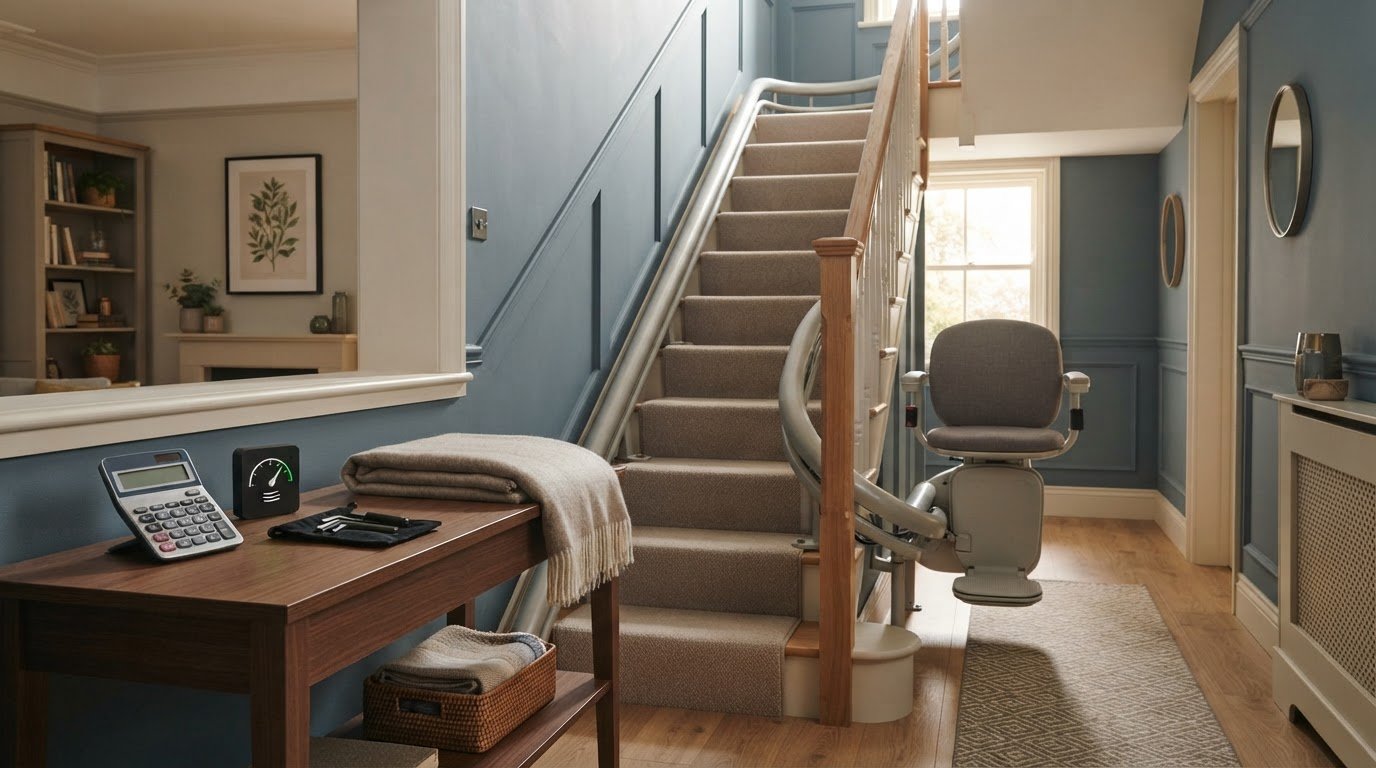
If your staircase features bends, turns, or winders, the Stannah 260 is a versatile curved option. It uses a twin-rail system that provides exceptional stability even on tight corners. One of its best features for small homes is the ability to customise the seat width to ensure you have enough knee clearance from the opposite wall. Additionally, the rail can often be designed with an "overrun" or a "parking turn". This allows the lift to travel slightly past the top or bottom of the stairs, so you can park the unit out of the way. This keeps the main walking path completely clear whilst the lift is not in use, providing peace of mind for the whole family.

How to Assess Your Stairs for a Narrow Stairlift
Assessing whether your home can accommodate a stairlift for narrow stairs is a straightforward process that you can begin yourself. It starts with identifying the specific physical constraints of your hallway. While every home is different, the goal is always the same: finding a solution that provides safety without making the stairs impassable for others. By following a few simple steps, you can determine if a slimline model is the right choice for your layout.
The first step is to measure the width of your staircase. You should also check for potential obstructions such as radiators, windowsills, or low bulkheads that might interfere with the chair's path. Finally, evaluate the landing space at both the top and bottom. You need enough room to park the lift safely away from doorways or trip hazards. Once you have these basics, you can use modern digital tools to get an immediate expert opinion without waiting for a home visit.
Taking Accurate Measurements at Home
The narrowest point is defined as the distance between the wall and the furthest obstruction, such as a handrail or a protruding radiator. When you are measuring, it is vital to account for "nose-to-nose" distances on steeper flights. This diagonal measurement between the edges of the steps helps engineers ensure the rail profile remains as low as possible. A common mistake is only measuring the floor width and ignoring the handrail. If the handrail takes up 100mm of space, your usable width is significantly reduced, which is why slimline models are so essential.
The WhatsApp Photo Assessment Advantage
In the past, you might have had to wait days for a professional surveyor to visit your home just to see if a lift was possible. We have simplified this by using a unique photo-based quoting system. By sending us a few clear photos via WhatsApp, you can receive a free, no-obligation quote quickly. This remote assessment reduces the stress of home visits and provides a low-pressure way to start your journey toward restoring independence.
To get the best results, stand at the bottom of the flight and take a photo looking up, then repeat this from the top looking down. Make sure the lighting is clear and that you capture any potential obstacles like radiators or tight corners. This allows our specialists to see the exact challenges of your staircase and recommend the most efficient rail configuration. If you are ready to see how a slimline lift could work in your home, send us your staircase photos via WhatsApp for an expert review today.
Professional Installation and Support for Small Spaces
Installing a stairlift for narrow stairs requires a level of precision that goes beyond a standard fitting. In a restricted hallway, there is very little margin for error. A few millimetres can determine whether a seat swivels smoothly or catches on a banister. This is why the technical skill of the engineer is just as important as the slimline model you choose. A professional approach ensures that your home remains a safe environment for everyone, with the lift calibrated to sit as close to the wall as possible.
Our engineers specialise in these complex fittings, acting as knowledgeable guides through the final stage of your journey. They understand the nuances of UK architecture, from steep Victorian flights to modern compact apartments. By focusing on high-precision stairlift installation, we ensure that your new mobility aid integrates seamlessly into your home without causing disruption or damage to your decor.
Precision Fitting in Confined Spaces
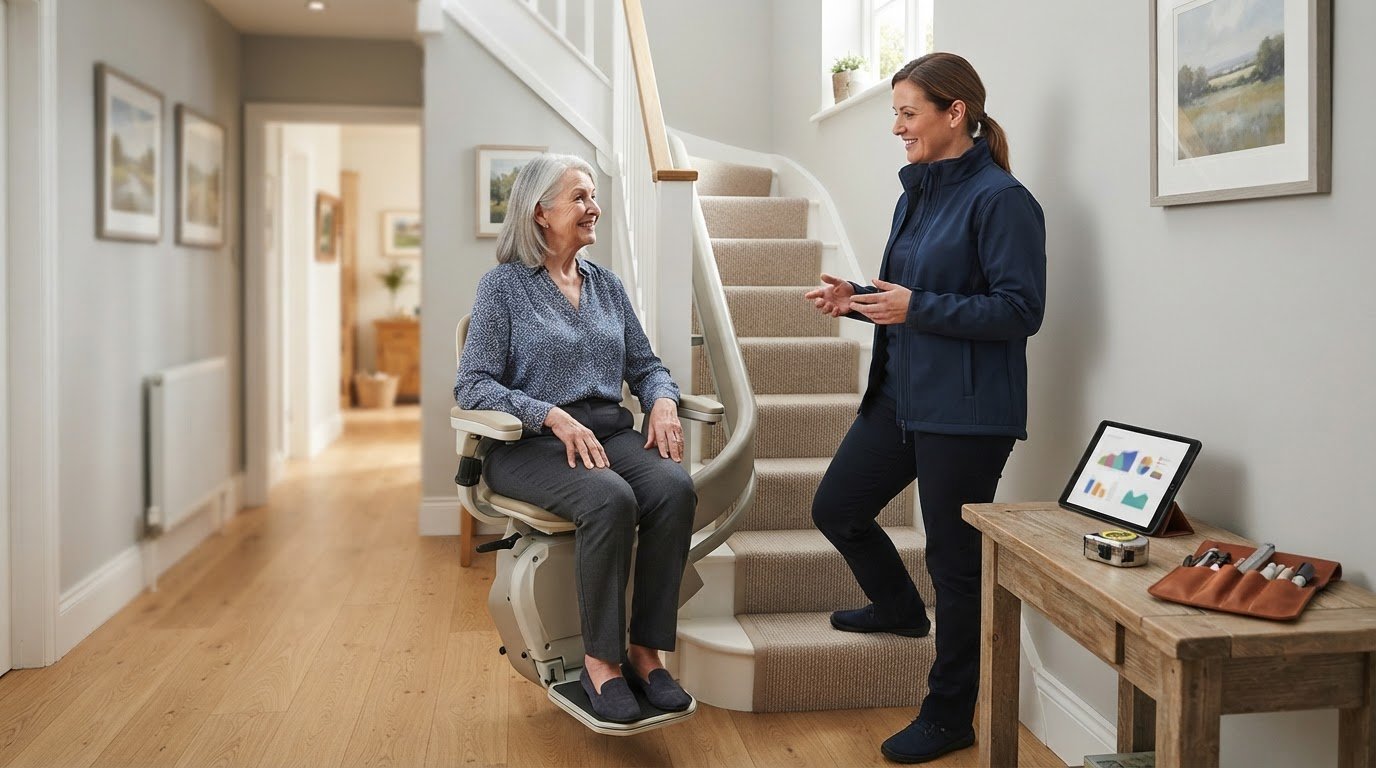
Working in tight hallways requires a careful touch to protect your walls and woodwork. During the installation, engineers meticulously test the swivel function to ensure you can exit safely onto the landing without your knees striking the opposite wall. They also take the time to adjust the seat height. This small calibration can significantly optimise knee room for the user, which is often the most critical factor on narrow flights. Once the lift is in place, they'll provide a thorough demonstration, making sure you feel completely confident and secure before they leave.
Long-Term Reliability and Repair
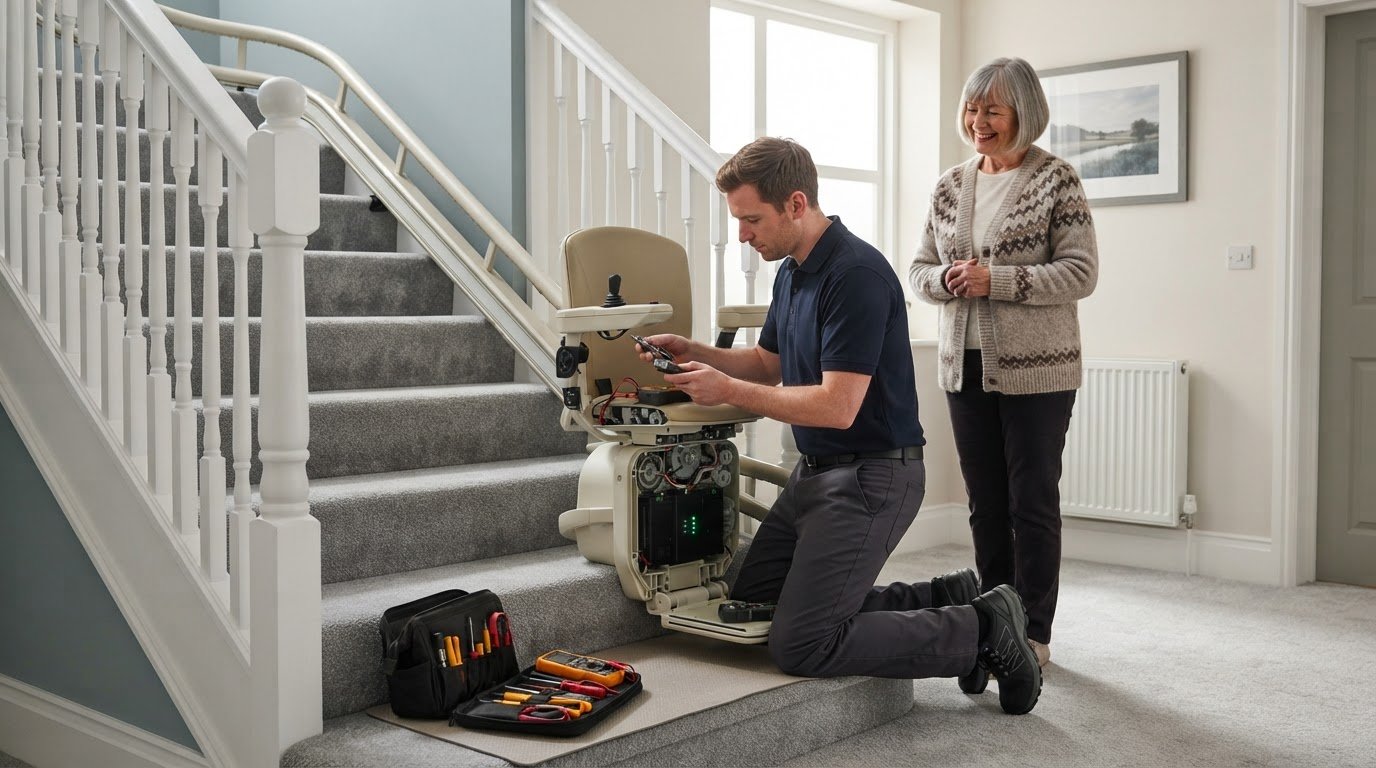
For many of our clients, the lift is the only way to access the upper floor of their home. This makes reliability a top priority. Regular stairlift repair and maintenance services are essential for preventing unexpected issues. Because narrow-stair installations operate within such tight tolerances, keeping the mechanism clean and well-lubricated is vital for long-term performance. We provide a dedicated national breakdown service across the UK, offering you peace of mind that support is always available if you need it.
We pride ourselves on being a trusted local expert with national reach. Our goal is to restore your autonomy through honesty, safety, and professional care. If you're ready to see how a slimline solution could work for you, send us a photo on WhatsApp for a free quote today. We'll provide clear, expert guidance to help you make the best decision for your home.
Reclaim Your Independence Today
Living in a home with restricted space shouldn't mean sacrificing your mobility or your peace of mind. We've explored how modern slimline technology, such as the Thyssen Homeglide and Stannah 260, ensures a stairlift for narrow stairs is a practical reality rather than a distant hope. By focusing on compact folded depths and precision rail positioning, these models maintain a safe, walkable path for the rest of your household whilst restoring your autonomy upstairs. It's about finding that perfect balance between your personal comfort and the functional needs of your shared home.
Our team of specialist Thyssen and Stannah installers is here to provide expert advice for even the most awkward spaces across the country. With national UK breakdown support and a commitment to professional, low-pressure care, we aim to make your home modification as simple as possible. You don't have to wait for a lengthy home visit to find out what is possible for your specific layout. Get a Free Quote via WhatsApp - Send Your Staircase Photos Now. We are ready to help you feel safe and secure in the home you love.
Frequently Asked Questions
What is the minimum width required for a stairlift for narrow stairs?
Most slimline models require a staircase width of at least 650mm to 660mm. However, specialist solutions like perch lifts or advanced swivel models can accommodate flights as narrow as 610mm. It is important to remember that the "back-to-knee" distance of the user is often the limiting factor rather than the chair itself. We recommend a professional assessment to ensure your knees won't strike the opposite wall or banister during travel.
Can I still walk up the stairs if a slimline stairlift is installed?
Yes, you can still walk up the stairs safely once the lift is parked. Modern slimline units fold away to a depth of between 310mm and 380mm, which typically leaves enough room for other residents to pass. By tucking the seat, armrests, and footplate against the wall, the staircase remains a shared space. This ensures that the installation doesn't become a permanent obstacle for family members or guests who still use the stairs.
Will a narrow stairlift work on a curved staircase?
A narrow stairlift is certainly available for curved staircases. Models like the Stannah 260 use a twin-rail system designed to navigate tight bends and winders with high precision. These systems can even be programmed to "overrun" the top or bottom steps, allowing you to park the chair completely out of the way. This keeps the main walking path clear whilst the lift is not in use, which is vital for compact hallways and landing areas.
Are slimline stairlifts less comfortable than standard models?
Slimline models are designed to be just as comfortable and secure as standard versions. While the chassis and rail are more compact, the seats often feature adjustable widths and padded upholstery to ensure a supportive ride. You don't have to sacrifice your physical comfort for a smaller footprint. These units are engineered to provide a smooth, stable journey, ensuring you feel completely at ease and safe every time you travel.
How much space does a folded stairlift actually take up?
When fully folded, a modern stairlift for narrow stairs usually occupies between 310mm and 380mm of the staircase width. This measurement includes the rail, the folded seat, and the footplate. Because the rail is mounted directly to the stair treads rather than the wall, it sits very close to the edge. This clever design maximises the remaining space, leaving roughly 300mm to 450mm of walkable width on most narrow UK flights.
Do I need to remove my handrail to fit a stairlift on narrow stairs?
You don't always need to remove the handrail, but doing so can gain you an extra 50mm to 100mm of usable width. Our engineers will evaluate your staircase to see if the original rail interferes with the lift's path. If it does, we'll discuss the best options whilst ensuring other residents still have a safe way to ascend the stairs. We always prioritise your safety and compliance with building regulations during any home modification.
Can a stairlift be fitted to a very steep, narrow staircase?
Yes, slimline models are specifically engineered for the steep, narrow flights often found in older UK terraces. The rail is custom-fitted to the angle of your stairs, ensuring a smooth and level ride regardless of the gradient. Our specialists focus on high-precision calibration to make sure the chair clears every step safely. If you're unsure about your specific layout, sending us a photo via WhatsApp is the quickest way to get an expert opinion.
How long does it take to install a slimline stairlift in a compact home?
A standard straight slimline installation typically takes between two and four hours to complete. If your staircase is curved or requires a more complex rail configuration, the process usually takes between four and eight hours. Our engineers work efficiently to minimise disruption, ensuring your home is tidy and your lift is fully operational by the time they leave. They will also provide a full demonstration so you feel confident and secure using it immediately.
Comments