What to Ask When Buying a Stairlift: A 2026 Buyer’s Guide
What if the most important stairlift question isn’t about the chair, but whether the whole journey will work for the person using it? If you’re wondering what to ask when buying a stairlift, look beyond the headline price. The right questions can help you understand whether a lift suits your staircase, feels comfortable in daily use and comes with support you can rely on.
A stairlift may make moving between floors easier, but choosing one can bring uncertainty. Will it suit a straight or turning staircase? What does installation involve? What happens if it needs attention later? Ask about these practical points early to compare options and understand what a tailored solution involves.
This 2026 buyer’s guide covers questions about suitability, comfort, installation, servicing and breakdown support. It also explains what to consider when requesting a quote, so you can take the next step with a clearer picture of your needs. ElevatedStairlifts offers a free, no-obligation quote based on staircase photos shared by WhatsApp or email.
Table of Contents
What should you ask first about your needs and daily routine?
What should you ask about your staircase and the recommended stairlift?
What should you ask about the quote, installation and what is included?
What questions reveal how safe, comfortable and dependable it may be?
How can you compare your answers and take a confident next step?
What should you ask first about your needs and daily routine?
There’s no single stairlift that suits every household. Start with the person who’ll use it, rather than focusing only on the staircase. How often do they need to travel between floors? Will they use the lift independently, or might someone need to help? Describing the daily routine helps shape a recommendation around comfort, confidence and ease of use.
Think through the whole journey, from approaching the seat to getting off at the other end. Someone who uses the stairs several times a day may have different priorities from someone who needs occasional help. Mention practical details such as carrying items, opening doors and moving around the landings. These can inform the installation discussion as well as the staircase layout.
Which questions clarify comfort and ease of use?
Comfort involves more than the seat. Consider posture, how easily the user can sit down and stand up, and whether getting on and off feels manageable. The controls should be understandable and reachable for the person using them. Describe any difficulties or concerns clearly, so the proposed solution can be discussed in light of the user’s needs.
For example, explain whether the user needs to open a door before reaching the stairs, or needs space to manoeuvre at the top or bottom landing. A small detail in the daily routine can affect how well the lift fits into the home.
How might changing needs affect the decision?
Needs can change, so ask whether the assessment takes current mobility and possible future requirements into account. This isn’t about predicting health outcomes. It’s about explaining what’s manageable now, what feels difficult and what the user would like to do more comfortably.
Consider whether anyone else may use the stairlift or need to operate its controls. Sharing this early helps keep the recommendation grounded in practical requirements rather than assumptions.
Use these prompts to prepare for a buying conversation. You don’t need every answer in advance; they’ll help you explain what matters.
Who will use the stairlift, and how often?
What feels difficult when sitting down, standing up or transferring?
Are the controls easy for the intended user to understand and reach?
How do doors, landings and everyday tasks affect the journey?
Could another household member need to use the lift or its controls?
What would the user like to manage more comfortably over time?
These are useful starting points for what to ask when buying a stairlift. A tailored installation discussion connects the user’s routine with the home’s layout, helping you understand why a particular arrangement may suit your needs.
What should you ask about your staircase and the recommended stairlift?
A stairlift needs to work with the home’s layout as well as the user’s routine. Ask what the staircase assessment considers and how its findings shape the recommended lift and rail arrangement. The aim is to understand why the recommendation suits your staircase, not just which general category it falls into.
What should a staircase assessment explain?
Ask how the assessment considers the staircase shape, landings, access points and available space. Measurements and clear photographs help show the route, particularly where it changes direction or meets a doorway. ElevatedStairlifts can provide a free, no-obligation quote using staircase photos shared by WhatsApp or email.
Discuss how the proposed arrangement may affect access to doors, landings and shared routes. Explain how the user gets on and off the seat and where they need room to do so. A useful recommendation should connect these practical details with the home’s layout, rather than treating the staircase as an isolated set of steps.
How do straight and curved stairs affect the options?
Staircase shape is one factor in choosing a suitable system. A straight flight follows a different route from stairs that turn or include landings, so ask how the proposed rail arrangement responds to your staircase. If the staircase is narrow, raise that early and ask how the assessment accounts for available space and access.
For either layout, ask: “Why is this option suitable for our staircase and the person using it?” The answer should explain how the home’s features relate to the user’s access needs. If you’re exploring manufacturer options, Forbes Health offers information on comparing top stairlift brands. A tailored assessment can then relate a recommendation to your home.
For more detail on installation, read this professional stairlift installation guidance. It can help you prepare focused questions about the fitting plan. Sharing staircase photos is a practical way to begin a discussion and request a tailored quote from ElevatedStairlifts.
What should you ask about the quote, installation and what is included?
A clear quotation should explain the proposed stairlift and fitting work, so you know what happens next. The assessment informs the recommendation; the quotation sets out the proposed scope, tailored to your home and requirements. Ask for anything unclear to be explained before agreeing a fitting plan.
Which quote details are worth clarifying?
Check what the quotation says about the equipment, fitting work and follow-up arrangements. Ask whether it reflects the staircase and user requirements discussed during the assessment, and what assumptions the recommendation is based on. If details about the home or the user’s needs change, ask how that could affect the plan and whether the quotation needs updating.
Comparing quotations is most useful when you look at the same scope in each, rather than focusing only on headline figures. Check whether each document describes the proposed equipment and fitting work clearly, and whether it explains follow-up arrangements. A written explanation makes differences easier to spot and helps you identify what still needs clarifying.
For an overview of factors that can affect a stairlift quote, see the UK stairlift price guide. Use it as context, then focus on how each proposal applies to your home. When considering what to ask when buying a stairlift, prioritise questions that clarify what has been recommended and why.
What should you expect from the fitting discussion?
Before agreeing a fitting plan, ask how installation will be organised around the home and the user’s routine. Discuss practical considerations such as access to the staircase and whether household routines need to change during the work. Ask what preparation is helpful, so everyone knows what to expect on the agreed fitting date.
The fitting discussion should follow the assessment and quotation, with the proposed arrangement explained in relation to your home. For more detail on the process, read what to expect during stairlift installation.
Request a free, no-obligation quote by sharing staircase photos by WhatsApp or email. This is a straightforward way to begin a tailored discussion about installation and the details that matter in your home. Explore stairlift installation support.
What questions reveal how safe, comfortable and dependable it may be?
A stairlift should feel manageable in everyday use, and you should know where to turn if it needs attention. Separate your questions into two areas: how the lift operates for the user, and what servicing or repair support is available over time. This helps you understand both the daily experience and the support that comes with the lift.
Which questions help assess day-to-day confidence?
Ask for a clear explanation of how to operate the stairlift and use its controls. The intended user should have the opportunity to learn how it starts, stops and responds during normal use. If the controls seem difficult to reach or understand, raise that concern during the discussion.
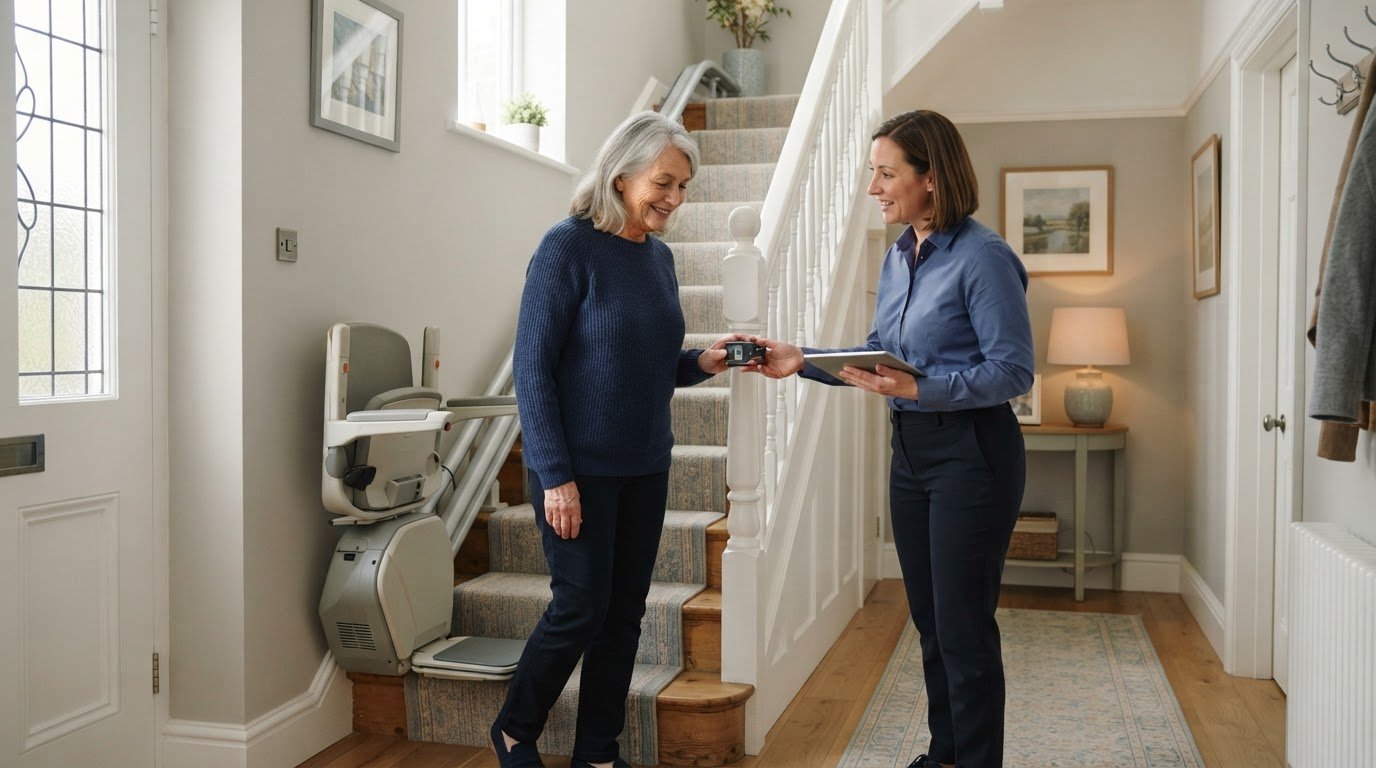
Consider the whole journey, including getting onto the seat, sitting comfortably and getting off at the landing. Ask what guidance will be provided after fitting and who can answer practical questions as the user gets used to the lift. A demonstration and time to discuss concerns can help the user feel more confident.
What should you ask about servicing and breakdown support?
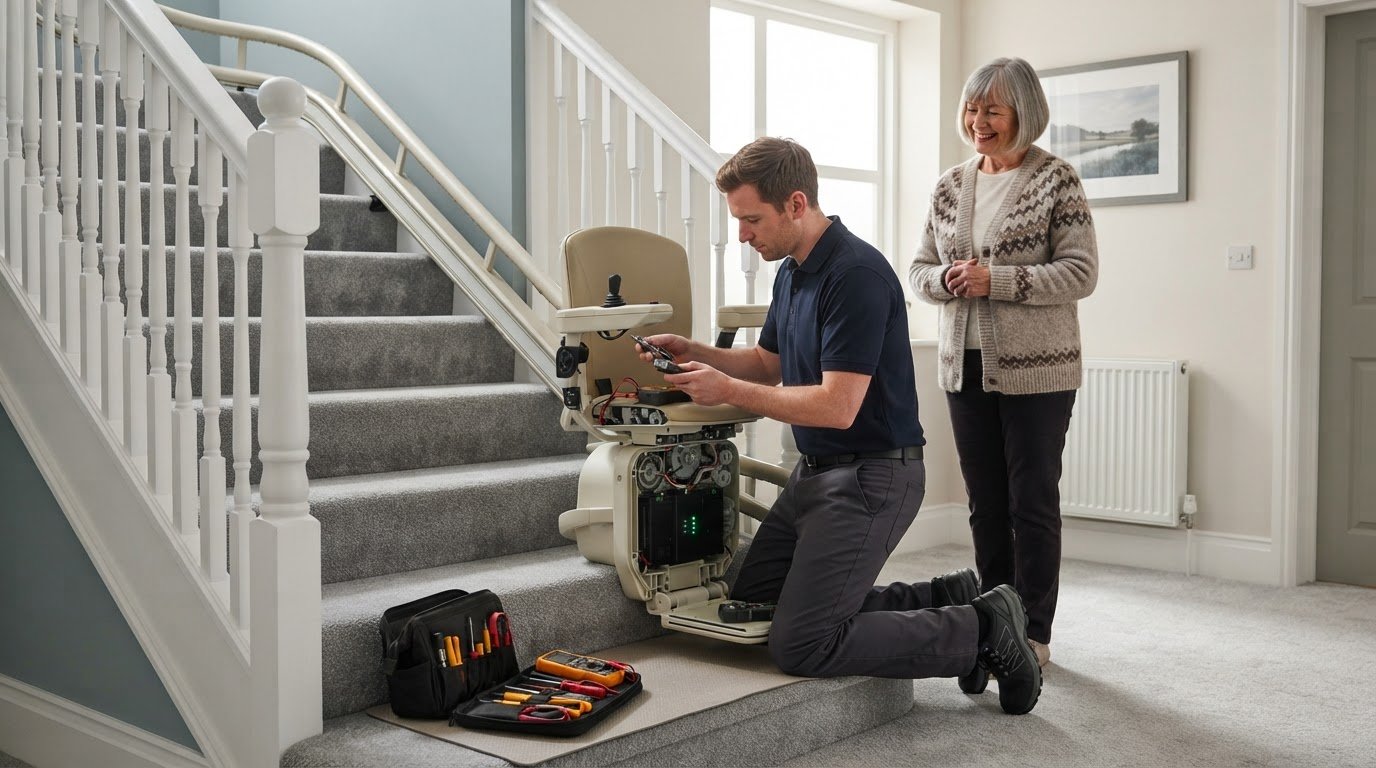
Ask how to arrange routine stairlift servicing, what repair support is available and what to do if the lift stops working or behaves unexpectedly. Find out how to describe the issue and what steps to take while waiting for advice. Ask for the support arrangements to be explained clearly.
ElevatedStairlifts provides stairlift servicing, repairs and breakdown support. Consider this ongoing care alongside installation, so you understand the support available after the lift is fitted.
As part of deciding what to ask when buying a stairlift, keep a short checklist:
Can the user practise the controls and explain how they work?
What should they do if the stairlift stops or behaves differently than expected?
How can servicing and repairs be arranged?
Who can answer practical questions after fitting?
For more guidance on keeping a stairlift safe and dependable over time, read the stairlift maintenance and reliability guide. When you’re ready to discuss installation and ongoing support for your home, request a tailored stairlift quote.
How can you compare your answers and take a confident next step?
Once you’ve gathered information, compare how each recommendation fits the person and the home. A consistent method can make differences clearer and show which practical questions still need answers.
How do you make sense of different answers?
First, write down the user’s essential needs. These might include feeling comfortable getting on and off, reaching the controls easily, or having a rail arrangement that works with the staircase and available access. Use the same questions for each recommendation, then compare the answers rather than relying on memory or one headline detail.
You could rate each option from 1 to 5 against four areas, with 1 meaning “needs more clarification” and 5 meaning “fits our needs well”. Use the score as a prompt for discussion, not as a technical assessment.
User comfort: Does the proposed stairlift suit the user’s posture, transfers and confidence?
Home suitability: Is the reason for the recommended arrangement clear in relation to the staircase and available space?
Quote clarity: Can you understand what the quotation covers and how the fitting plan is tailored?
Ongoing support: Do you understand how to arrange servicing or repairs and what to do if something goes wrong?
Make a note beside any low score or unanswered point. If the user is unsure about operating the controls, ask for another explanation. If you can’t tell what the quotation includes, ask for a clearer explanation before deciding. Comparing the same details gives you a fairer view than weighing answers based on different criteria.
A scoring sheet is a guide, not a substitute for your judgement. The right choice needs to address the person’s circumstances and the home’s layout, not just tick boxes on a generic list. Consider what matters most to the user, discuss any uncertainty and take the time needed to feel comfortable with the proposed solution.
What is a simple next step if you are ready?
To begin a tailored discussion, gather clear photographs of the staircase and a short description of the user’s needs. These details help focus the quote conversation on the home and the person who’ll use the lift. ElevatedStairlifts provides a free, no-obligation quote using staircase photos sent by WhatsApp or email.
When you’re ready, request a stairlift quote. You can discuss the proposal and take time to consider it before deciding.
Take your next step with confidence
The right stairlift is one that suits the person using it and the staircase it needs to fit. Keep your priorities clear: comfort and ease of use, a recommendation that makes sense for your home, and a quotation that explains the proposed work and ongoing support. These are the essentials behind what to ask when buying a stairlift.
ElevatedStairlifts installs stairlifts across the UK, including the Thyssen Homeglide and Stannah 260 models. Professional servicing, repairs and breakdown support also help you plan for the stairlift beyond installation day.
To begin, share staircase photos by WhatsApp or email and request a free, no-obligation quote. Request your free, no-obligation stairlift quote and discuss an installation tailored to your home.
Frequently Asked Questions
What should I ask before buying a stairlift?
Ask how the stairlift will suit the user’s comfort, confidence and daily routine, and how the staircase layout shapes the recommendation. Clarify what the quotation covers, how fitting will be arranged and what servicing or repair support is available afterwards. Writing down your priorities first can make the discussion easier. Use the same questions when comparing recommendations, so you can weigh them against your needs rather than assume one model or feature suits every household.
How do I know which stairlift is right for my staircase?
A suitable recommendation takes account of the staircase shape, landings, available space and the user’s access needs. An assessment relates those details to an appropriate stairlift and rail arrangement for your home. Ask why the proposed option fits your staircase and how it supports the user’s access. A product description alone can’t show how a lift will work in your layout, so ask for the reasoning behind the recommendation.
Can I get a stairlift quote using photographs?
Yes. ElevatedStairlifts offers a free, no-obligation quote when you share staircase photos by WhatsApp or email. Photos are a useful way to start a conversation about the staircase and the user’s requirements. Include a brief description of who will use the lift and any practical needs you’d like considered. The quote can then be discussed in relation to your home, with the recommendation and fitting plan considered in more detail.
What should a stairlift quote include?
A stairlift quote should clearly describe the proposed equipment, fitting work and any follow-up arrangements it specifies. Ask which details have been tailored to your staircase and the user, and whether any assumptions affect the quotation. If something is unclear, ask for an explanation before comparing options. For a fair comparison, look at the same scope in each quotation rather than focusing on headline figures alone. This helps you understand what has been proposed.
What should I ask about stairlift repairs and servicing?
Ask how to arrange routine servicing, how repair support works and what to do if the stairlift stops or behaves unexpectedly. Knowing the support route can make ownership feel more manageable, especially if the user relies on the lift for everyday access between floors. ElevatedStairlifts provides stairlift servicing, repairs and breakdown support. Ask about the practical steps so you understand how to seek help, without assuming a particular response time or outcome.
Do I need to choose a stairlift model before requesting a quote?
No. You can begin by describing the user’s needs and sharing staircase photographs, without knowing technical model details. A tailored discussion can connect the home layout with a suitable recommendation. ElevatedStairlifts installs Thyssen Homeglide and Stannah 260 stairlifts. The right option depends on the individual staircase and user, so these models shouldn’t be assumed to suit every home. Start with what matters in your circumstances.
What happens during a stairlift assessment?
An assessment considers the staircase layout, access and the user’s practical needs. Ask how these findings inform the recommended stairlift, its arrangement and the proposed fitting plan. Explain any difficulties the user has getting on or off, or moving around landings, so these needs can be considered. For a fuller explanation of professional fitting, read the stairlift installation guide.
Comments