What Is Included in a Stairlift Annual Service? A Practical UK Checklist
A stairlift can seem to be working normally while a developing fault or worn part needs attention. If you’re wondering what is included in a stairlift annual service, the checks are intended to assess its condition and operation, and may help identify concerns before they become more disruptive.
This guide explains common service checks, from the rail and moving parts to the batteries and safety features. You’ll also learn how to prepare for the visit and what details to share if you’ve noticed unusual sounds, movement or stopping.
An annual service is preventative maintenance, not a fix for every fault. If an engineer identifies a problem that needs repair or a replacement part, that work may need to be arranged separately. Knowing the difference helps you prepare for the appointment and understand the next steps.
Table of Contents
What Is Included in a Stairlift Annual Service? Start with the Purpose
A stairlift annual service is a planned professional assessment of the lift’s condition and operation. The engineer reviews how it is working, looks for concerns that may need attention and explains suitable next steps. It’s preventative care, not a guarantee that a fault won’t develop between visits.
If you’re asking what is included in a stairlift annual service, there isn’t one identical checklist for every lift. The assessment depends on the model, its condition and the manufacturer’s guidance. A service may identify a need for further work, but repairs, adjustments or replacement parts aren’t automatically part of the appointment.
What is the purpose of a stairlift service?
A service gives an engineer the opportunity to assess the lift as a working system, rather than waiting for a specific problem to disrupt use. They can review how it operates and whether anything appears to need attention. Tell the engineer about changes you’ve noticed, such as unusual movement or sound, so they can take them into account during the assessment.
For a general introduction to stairlifts, the Stair lift overview describes common types and components. A professional service assesses the individual lift, rather than relying on a general description alone.
Think of servicing as a condition check, not a promise that the stairlift will never develop a fault. If it stops working or develops a particular fault, report that separately. A repair visit responds to a problem; a scheduled service assesses the lift’s condition and operation.
Does every stairlift receive the same annual service?
No. The appropriate assessment depends on the model and what the engineer finds. Manufacturer guidance informs model-specific recommendations, so the procedure for a Thyssen Homeglide may differ from that for a Stannah 260. These are examples of different models, not evidence that one checklist applies to both.
The lift’s condition matters too. The engineer may consider reported symptoms or visible concerns, then explain whether anything needs attention beyond routine servicing. This helps you understand what was assessed, what the findings mean and whether further work is recommended.
In short, a professional service is a planned assessment guided by the stairlift’s model, condition and manufacturer recommendations. The findings help determine the next step, whether that’s continuing to use the lift or arranging separate work for an identified concern.
The Main Stairlift Annual Service Checks, Explained Step by Step
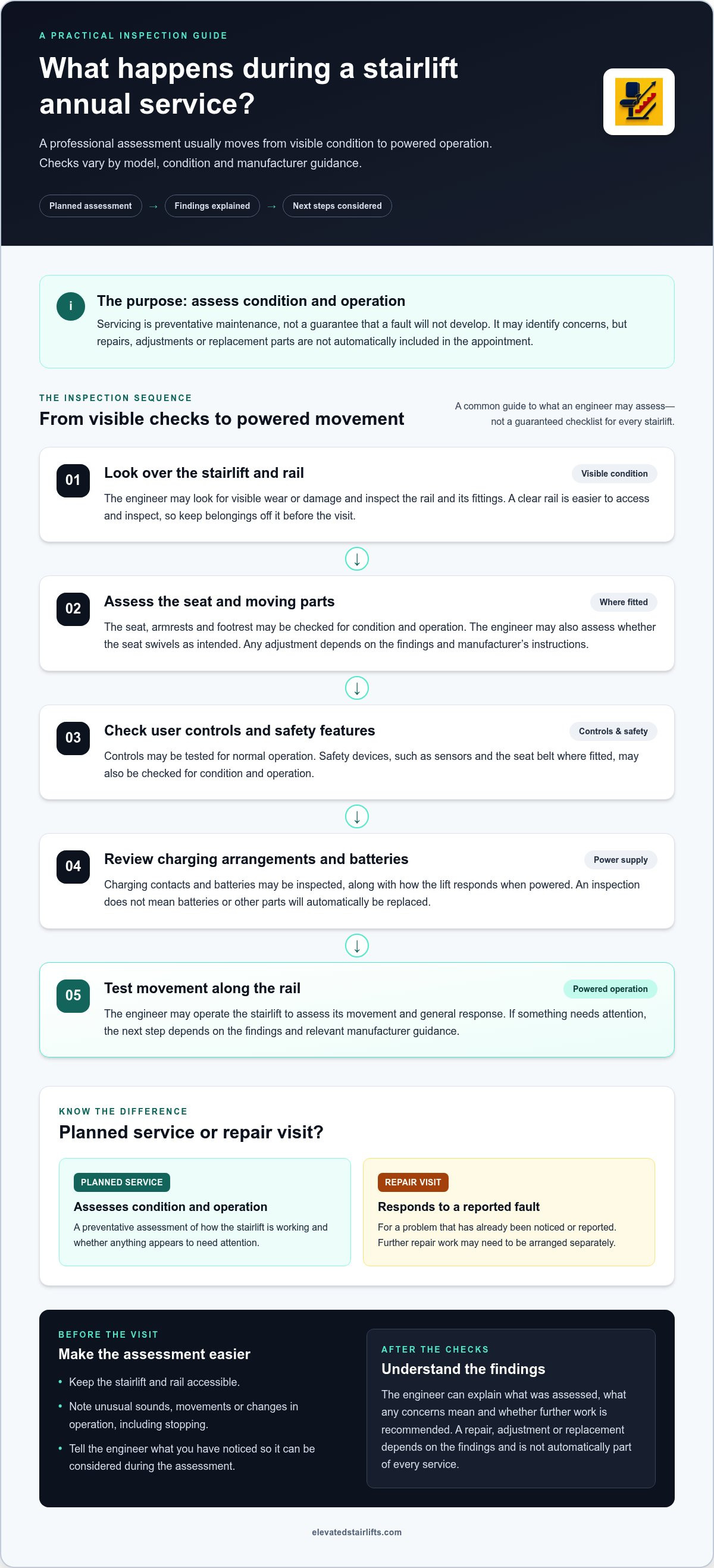
So, what is included in a stairlift annual service? An engineer may work through several common inspection areas, moving from visible condition to powered operation. This is a practical guide, not a guaranteed checklist: the checks can vary by model, condition and manufacturer guidance.
Look over the stairlift and rail. The engineer may check for visible wear or damage and inspect the rail and its fittings. Keeping the rail clear of belongings makes it easier to access and inspect.
Assess the seat and moving parts. Where fitted, the seat, armrests and footrest may be checked for condition and operation. The engineer may also assess whether the seat swivels as intended. Any adjustment depends on the findings and manufacturer’s instructions.
Check user controls and safety features. Controls may be tested to assess normal operation. The engineer may also inspect safety devices, such as sensors and the seat belt where fitted, for their condition and operation.
Review charging arrangements and batteries. Charging contacts and batteries may be inspected, along with how the lift responds when powered. An inspection doesn’t mean batteries or other parts will automatically be replaced.
Test movement along the rail. The engineer may operate the stairlift to assess its movement and general response. If something needs attention, the next step depends on the findings and relevant manufacturer guidance.
Visual condition, rail and moving parts
A visual inspection can identify concerns that aren’t obvious during everyday use, such as visible damage or a fitting that needs closer attention. The seat and its components are also part of the user experience, so their condition and operation may be assessed. Exact checks depend on the stairlift design; not every model has the same features or needs the same adjustments.
Controls, safety devices and powered operation
Testing the controls and movement lets the engineer assess how the stairlift responds in use. Safety features, batteries and charging contacts may also be checked where applicable. The HSE’s Lifting Operations and Lifting Equipment Regulations (LOLER) guidance provides separate information about lifting-equipment requirements; it isn’t a checklist for a domestic annual service.
If a check identifies a concern, the engineer can explain what it means and advise on suitable next steps. Any further adjustment, repair or replacement depends on the findings and the scope of work; it isn’t automatically part of every service. ElevatedStairlifts provides stairlift servicing and breakdown support across the UK.
Annual Stairlift Service vs Repair: What Is the Difference?
A planned service and a repair visit have different purposes. A service assesses the stairlift’s condition and operation; a repair responds to a fault that has already been noticed or reported. If you’re working out what is included in a stairlift annual service, remember that it’s a preventative assessment, not an automatic repair appointment.
A service isn’t automatically a sales pitch or a repair. If the engineer finds a concern, they should explain what they observed and advise on suitable next steps. Any repair, adjustment or replacement depends on the findings and the work required. It isn’t automatically included just because the service identified the issue.
When is routine servicing the right next step?
If the stairlift appears to be operating normally, a planned assessment can review its condition before a particular fault arises. Follow the manufacturer’s maintenance guidance for your model, as recommendations can differ. Landlords and organisations managing stairlifts may also have responsibilities to consider. The NHMF’s Compliance in practice guide discusses good practice for stairlifts and hoists in housing. Appropriate arrangements depend on the setting and circumstances.
When should a concern be treated as a repair issue?
Report a fault rather than waiting for a scheduled service if the lift behaves unexpectedly, stops repeatedly or a control fails to respond. Note when the issue happens and what you observe, without trying to dismantle or adjust the equipment yourself. If the stairlift appears unsafe, stop using it and arrange advice about the fault.
A repair assessment focuses on the reported problem, and the outcome depends on what the engineer finds. For more detail on fault-led support, read our professional stairlift repair guide. Keeping routine servicing and repairs distinct helps set clear expectations for each visit.
Your Stairlift Service Visit Checklist: Before, During and After
A little preparation can help the engineer assess the stairlift and understand any concerns you’ve noticed. Keep the route to the lift clear and make a few notes beforehand, especially if an issue happens only occasionally. You don’t need to diagnose the problem yourself.
How to prepare for the engineer’s visit
Make the stairlift and rail accessible. Move belongings from the seat and nearby area, and keep the staircase clear so the engineer can reach and assess the equipment.
Secure pets away from the work area. This helps keep the visit calm and gives the engineer room to work.
Write down any changes. Note unusual sounds or movement, repeated stopping, charging concerns or controls that don’t respond. If there’s a warning light, record what it looks like and when it appears.
Have useful details to hand. If readily available, note the stairlift’s model or ownership information. Don’t worry if you can’t find it; your observations are still helpful.
Be specific where you can. Note whether the lift stops at a particular point, whether a sound occurs during travel or at rest, and whether the issue happens every time or only occasionally. These details give the engineer a clearer account of what you’ve experienced.
What to understand before the appointment ends
During the visit, ask the engineer to explain the assessment in plain English. For example: “What did you check, and did anything need attention?” If they identify a concern, ask how it could affect operation and what next step they recommend.
Clarify which checks were completed as part of the service.
Ask whether follow-up work is recommended and why.
Check whether proposed repair work or a replacement part is separate from the service.
Make a note of the findings and agreed next steps, including anything you’ve been advised to monitor.
Keeping a record makes it easier to remember what was discussed and share relevant details if you need further support. For practical advice between appointments, read our stairlift maintenance and safety guide.
ElevatedStairlifts provides professional stairlift servicing and breakdown support across the UK.
After a Stairlift Annual Service: Understand the Findings and Next Steps
Knowing what is included in a stairlift annual service is only part of the picture. The findings matter too. The engineer may identify no immediate concern, recommend monitoring something or suggest further work. A service assesses the stairlift at that time; it can’t guarantee that a fault won’t develop later.
A clear explanation helps you understand the result. If the engineer recommends action, ask what they found, how it could affect the stairlift’s operation and what the proposed next step involves. Repairs, adjustments or replacement parts depend on the findings and scope of work, so don’t assume they’re included automatically.
What if the engineer identifies a concern?
Ask the engineer to describe the concern in plain English and explain whether it needs attention now or should be monitored. You can also ask what could happen if the issue is left unresolved and whether follow-up work is separate from the service. The answers can help you weigh up the recommendation and make an informed decision.
If the engineer advises that the stairlift is unsafe to use, follow that safety advice and don’t continue using it until you’ve received guidance on the next step. If you notice a new fault after the appointment, describe what has changed and when it occurs. An earlier service doesn’t rule out a later problem.
How professional support helps maintain confidence
Professional servicing gives you an opportunity to discuss the stairlift’s condition, while repair support can address a fault that needs investigation. Keep a note of the findings and agreed actions so it’s easier to follow up and explain any changes you notice. You should leave with a clearer understanding of what was assessed and whether anything remains to be addressed.
There’s no need to treat every recommendation as an emergency, but do take safety advice seriously and ask for clarification if anything is unclear. ElevatedStairlifts provides stairlift servicing and breakdown support across the UK, helping owners understand concerns and suitable next steps.
To discuss stairlift servicing and support, visit ElevatedStairlifts.
Feel More Prepared for Your Next Stairlift Service
Knowing what is included in a stairlift annual service can make the visit more straightforward. Common checks may cover the rail, seat, controls, safety features and charging arrangements, but the exact assessment depends on the stairlift and its condition.
Remember the distinction: a planned service assesses operation and condition, while a repair responds to a specific fault. Note any unusual sounds, stopping or control issues, and ask the engineer to explain the findings and recommended next steps. Further repairs or replacement parts aren’t automatically included in a service.
ElevatedStairlifts provides stairlift servicing and breakdown support across the UK, and installs Thyssen Homeglide and Stannah 260 stairlifts. For support with your stairlift, explore professional stairlift servicing and support.
A clear assessment and helpful explanation can make it easier to decide what to do next, with confidence and at your own pace.
Frequently Asked Questions
What is included in a stairlift annual service?
A stairlift annual service is a professional assessment of its condition and operation. Common areas may include the rail, seat and moving parts, user controls, safety features, batteries and charging contacts, followed by an operational check. The procedure varies with the model, its condition and manufacturer guidance, so this isn’t a guaranteed checklist for every lift. If the engineer finds a concern, they can explain whether further work is recommended.
How long does a stairlift annual service take?
A standard stairlift service typically takes around 45 to 90 minutes, although the time can vary depending on the lift and what needs assessing. If the engineer identifies a concern that requires further investigation, the appointment may need additional work or a separate repair visit. Allow enough time for the engineer to assess the equipment and explain the findings, rather than expecting every service to follow an identical schedule.
Does a stairlift need an annual service?
Regular professional servicing is recommended to assess the stairlift’s condition and operation, but a domestic stairlift doesn’t have a universal legal requirement for an annual service. Follow the maintenance guidance for your particular model, as recommendations can vary. Requirements may differ in workplaces or other settings, so don’t assume domestic guidance applies there. A service is preventative care, not a guarantee that a fault won’t occur between appointments.
Does an annual stairlift service include repairs or replacement parts?
No. Repairs or replacement parts aren’t automatically included in a service. The appointment assesses the stairlift, while repair work responds to a specific fault or concern. If the engineer finds something that needs attention, they can explain the finding and recommend a next step. Ask which checks were completed and whether any proposed adjustment, repair or part replacement is separate, so you understand the scope of work.
Can I use my stairlift if it has a problem before its service?
If the stairlift behaves unexpectedly or appears unsafe, stop using it and arrange advice about the fault rather than waiting for a planned service. Examples include repeated stopping, unusual movement or a control that doesn’t respond. Don’t try to dismantle or adjust the lift yourself. Note what happens and when, then share those details when reporting the problem. A service appointment may not be the right response to an active fault.
What should I do before a stairlift service appointment?
Keep the staircase, stairlift and rail accessible so the engineer can assess the equipment. Secure pets away from the work area, and note any unusual sounds, stopping, charging concerns, warning lights or control issues. Include when the problem occurs and whether it happens repeatedly. If model or ownership details are readily available, have them to hand, but your observations are useful even if you can’t find those details.


Comments