Stairlift for Arthritis: Features to Compare Before You Choose in 2026
Updated: Oct 3
The most helpful stairlift for arthritis may not be the one with the longest list of features. It’s the one that feels manageable through the movements you make every day: getting seated, using the controls and standing up again. If pain or stiffness makes those actions uncomfortable, it’s understandable to wonder whether a stairlift will be practical for you.
You don’t have to guess which features may suit you. A comfortable seat, easy-to-operate controls, a swivel seat and a folding footrest may all be worth comparing, but their usefulness depends on your movement and your staircase. No feature can guarantee pain relief or be right for everyone.
This guide explains what to look for and what to try during an assessment. You’ll learn how to compare everyday tasks, discuss your needs with a stairlift professional and take a considered next step without feeling rushed.
Table of Contents
How arthritis can change what you need from a stairlift
Arthritis affects people differently, so there’s no single combination of stairlift features that will feel comfortable for everyone. Your priorities may depend on which movements you find difficult, how easily you move between sitting and standing, and whether your needs vary throughout the day. Start by noticing what feels awkward in your own home, then compare possible features against those everyday movements.
Think about a stairlift for arthritis in practical terms: can you approach the seat, sit down, operate the controls and stand up in a way that feels manageable? A feature may sound useful in a product description, but trying it yourself can show whether it suits your movement and preferences.
Individual assessment matters more than a universal feature checklist. The right option is the one that fits your movements, comfort and staircase.
Which everyday movements may feel more difficult?
Consider each part of the journey, not just the ride. Does lowering yourself onto a seat or rising from it feel awkward? Is turning to sit down or maintaining a steady posture uncomfortable? You may also want to check whether gripping a control or reaching it is difficult. These are prompts to help you assess your own routine, not experiences that everyone with arthritis will share.
Make a brief note of what feels awkward and when. A movement that’s manageable at one time of day may feel different later. Bring these observations to an assessment so you can explain what you want to try and ask relevant questions.
What a stairlift can and cannot do
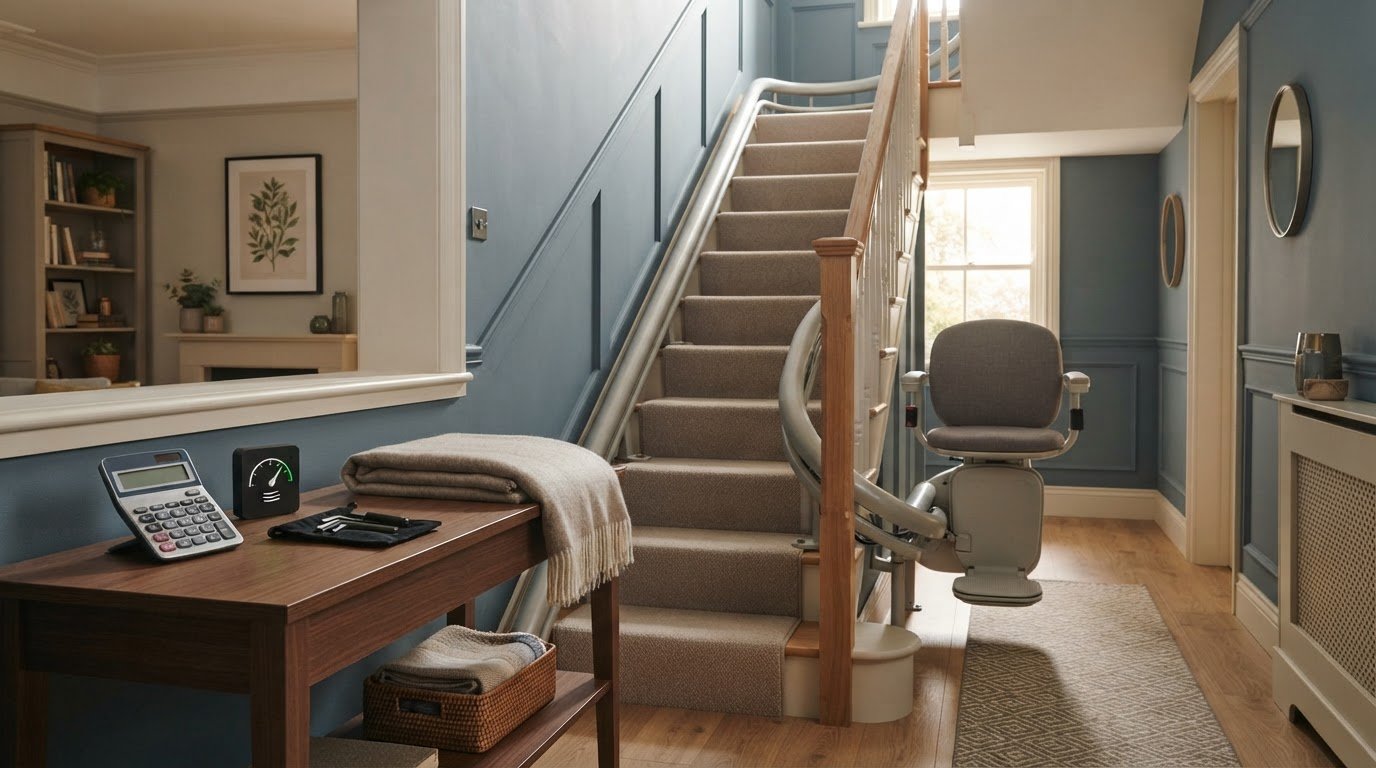
A stairlift carries a seated user along a rail on a compatible staircase. If you’re unfamiliar with how stairlifts work, this stair lift overview explains the basic arrangement, including straight and curved rails. The staircase layout and your ability to transfer onto and off the seat are both important when considering suitability.
A stairlift doesn’t diagnose, treat or prevent arthritis symptoms, and it can’t guarantee pain relief. It may help you travel between floors while seated, but getting on and off remains part of the journey to consider. For wider context on mobility around the home, read this guide to independent living stairlifts.
Use your observations to guide a conversation rather than assuming a particular feature or model will suit you. A professional assessment can help match your practical needs to the staircase and clarify what to compare.
Which stairlift features are worth comparing when you have arthritis?
Focus on how each feature works for you instead of assuming one option is best for everyone. During an assessment, try the movements that matter in your routine and ask which options are available for the stairlift and staircase being considered. Features can vary by model, so ask for details to be confirmed rather than relying on a general description.
Seating, transfers and getting on or off
Pay close attention to the transition onto and off the seat. During an assessment, try sitting and standing with suitable assistance. Check whether the seat position, armrests and swivel operation feel comfortable and within reach. If you’re unsure about transfers, consider asking a companion or clinician to help you assess what feels manageable. Don’t rush the test or attempt a movement that feels unsafe.
Controls, grip and footrest operation
Control position and operating method can affect how straightforward a stairlift feels to use. Try the controls with the grip you’d normally use, and check that you can reach them without twisting or stretching. Ask whether the footrest is operated manually or by power, and confirm which options are available for the model being discussed. A feature listed for one stairlift may not be offered on another.
There’s no universal ranking of features for a stairlift for arthritis. Give priority to the actions that feel most awkward in your own routine, then ask the installer which options can be assessed for your staircase. You can also discuss your staircase and practical needs before deciding what to compare.
Will a stairlift suit your arthritis and staircase?
Suitability depends on more than a stairlift’s features. The staircase must allow an appropriate installation, and you need to be able to get on and off the seat in a way that feels manageable. A professional assessment can consider the stairs, landing, available access and your everyday routine together.
A suitable option depends on both the staircase and the person using it. Seated travel may make moving between floors more manageable for some people, but it still involves transferring onto and off the seat. A lift also takes up space when parked, which may affect how other people use the stairs. Consider these practical benefits and trade-offs in your own home instead of assuming one arrangement will suit everyone.
Questions about your staircase and home routine
Ask how the staircase layout and landing affect the possible installation, and whether there’s enough access to approach and leave the seat. Discuss where the lift would be parked and whether it could affect other household members using the stairs. If you’re concerned about limited space, see this guide to stairlifts and safer stairs for related safety context. Remember that a stairlift doesn’t remove every household risk.
Describe your routine specifically: who uses the stairs, what needs to be carried between floors, and whether anyone else may need to pass the lift. These details can help the installer explain the practical implications of different options for your home.
When to involve a healthcare professional
If you’re unsure whether you can transfer safely, or have concerns about balance, posture or movement, ask your GP, occupational therapist or relevant clinician for advice. They can discuss your individual mobility needs. A stairlift assessment considers the equipment and staircase; it isn’t a clinical assessment or a substitute for medical advice.
Keeping these conversations separate can help clarify the decision. Take personal mobility questions to a healthcare professional and home-fit questions to the installer. For those also exploring posture support or guided physical rehabilitation, learn more about dedicated strengthening and mobility devices. Together, these discussions can help you decide whether a stairlift for arthritis is worth exploring, without treating any feature or configuration as a guaranteed solution.
How to assess and compare stairlifts before deciding
A little preparation can make an assessment more useful. You don’t need to choose a model on the spot. Focus on describing your routine, trying relevant options where appropriate and getting clear answers to consider afterwards.
Prepare a personal feature checklist
Before comparing a stairlift for arthritis, jot down which movements feel difficult, when they tend to happen and whether you currently use any assistance. Add preferences for control position, seating and access around the stairs. A trusted supporter can come along if it would help to have someone listen, take notes or compare options with you.
Make the assessment useful and unhurried
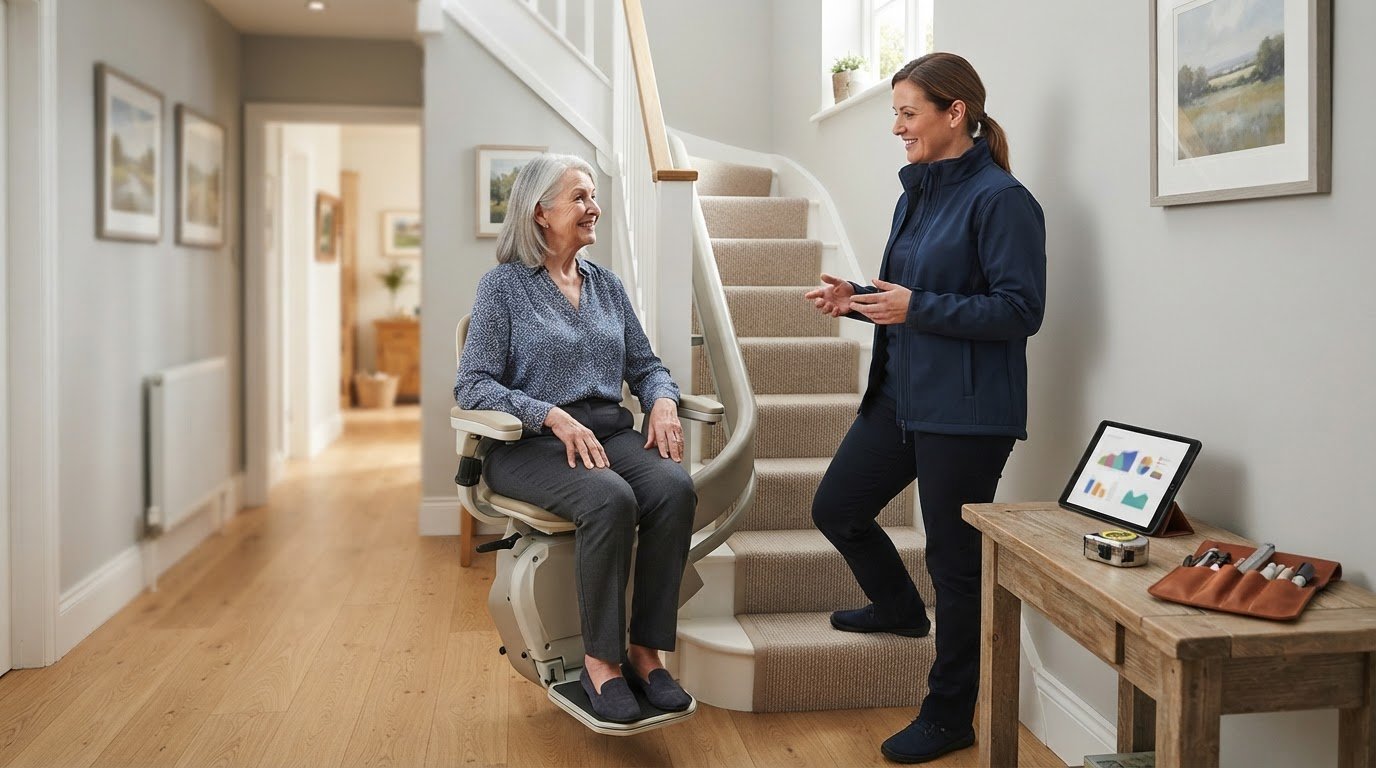
Ask the assessor to explain options in clear, everyday language. An assessment should help you understand how a stairlift may fit your staircase and routine; it doesn’t mean you have to decide immediately. You can also read about professional stairlift installation to learn more about the process.
Before the visit: Write down awkward movements, preferred control placement and questions about seating or household access. Note when movement feels different so you can describe your routine accurately.
During the assessment: Explain your priorities and ask which features are available for the staircase and model being considered. Where appropriate, try the controls and seating with support. Don’t attempt a movement that feels unsafe or uncomfortable.
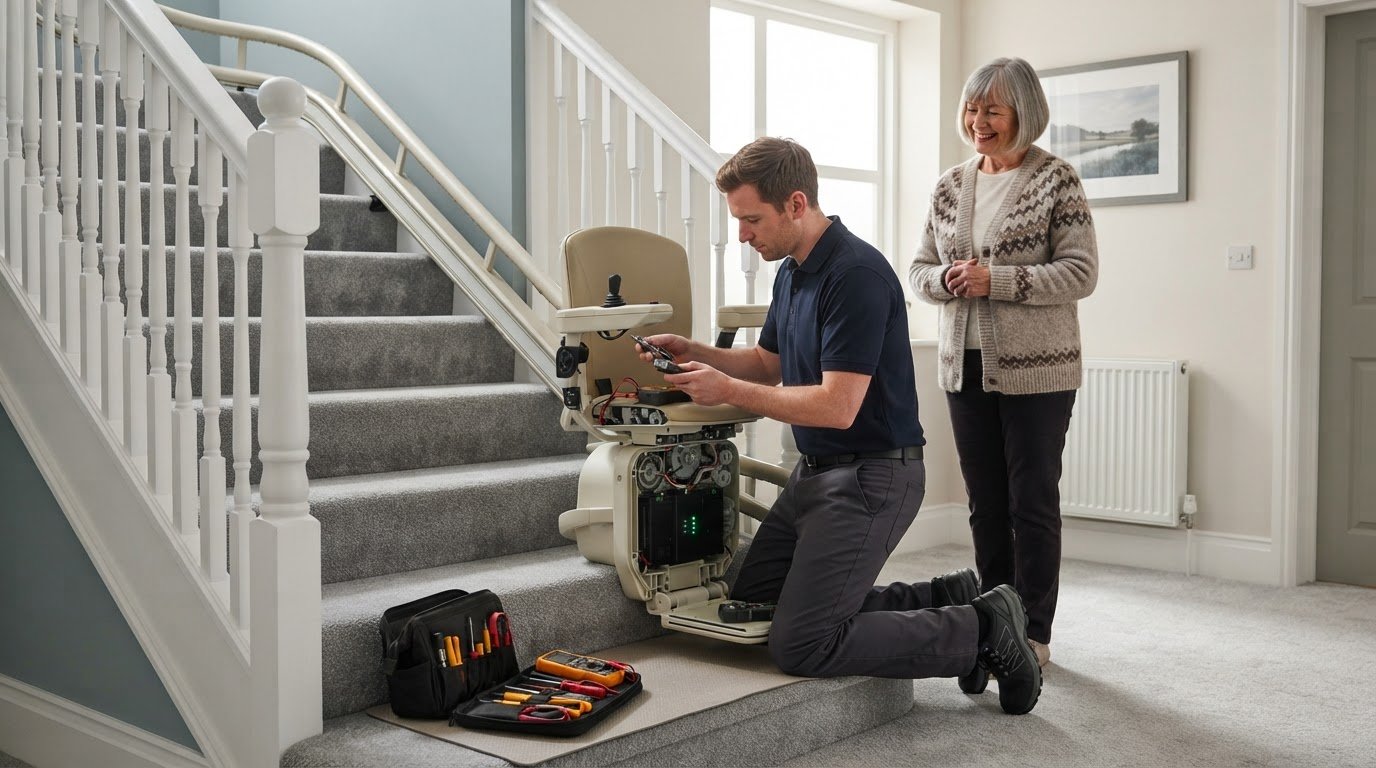
Ask about practicalities: Find out how the stairlift operates and what servicing and breakdown support are available. Ask for anything unclear to be explained, and check details rather than assuming they apply to every model.
Afterwards: Review your notes and compare how each option addressed your priorities. Take time to ask follow-up questions before deciding.
Keep your comparison centred on what you observed, not on which option has the most features. ElevatedStairlifts installs stairlifts across the UK and offers free, no-obligation quotes. If you’d like to discuss your staircase and practical needs, ask ElevatedStairlifts about a no-obligation quote.
Choosing an installer and taking your next step
Clear, patient answers can make it easier to compare installers and decide what to do next. Look for someone who takes your priorities seriously, explains how the proposed arrangement relates to your staircase and routine, and clarifies what happens after installation. You should have enough information to consider your options without feeling rushed.
Questions to ask before agreeing to installation
Use your notes to keep the conversation practical. Ask how the proposed setup addresses the seating, access and control priorities you’ve raised. If a particular movement concerns you, ask how the arrangement may affect it and what you can try or check during the assessment.
What does the assessment cover, and what will be checked before installation is agreed?
How will the proposed stairlift fit the staircase and the way I need to get on and off?
How does the stairlift operate, and can I try the relevant controls and seating where appropriate?
What servicing and breakdown support are available after installation, and how are they arranged?
Ask for explanations in everyday language, especially if a product description or process isn’t clear. ElevatedStairlifts installs the Thyssen Homeglide and Stannah 260, but availability can change. Ask which models are currently available and request confirmation of any features relevant to your needs. Don’t assume either model has specific arthritis-related features without checking the details.
A low-pressure route from research to advice
You can gather information and ask questions before deciding whether a stairlift is right for your home. ElevatedStairlifts provides stairlift installation, servicing and breakdown support across the UK. Sharing staircase photos by WhatsApp or email may help start a quote discussion, but photos don’t replace any assessment needed to check suitability and installation details.
If you’d like to explore the next step at your own pace, you can request a free, no-obligation stairlift quote. It’s an opportunity to discuss your staircase and practical priorities, with no need to decide before you’re ready.
Take the next step at your own pace
Choosing a stairlift for arthritis is a personal decision. Rather than relying on a universal feature list, focus on the movements you find difficult and try relevant seating and controls where appropriate. The option worth exploring depends on your needs and your staircase, including how you’ll get on and off the seat and how the lift fits your household routine.
Before deciding, ask the installer to explain the proposed arrangement, what the assessment and installation involve, and how servicing and breakdown support are handled. ElevatedStairlifts installs Thyssen Homeglide and Stannah 260 stairlifts, with current availability to be confirmed. The company provides stairlift installation, servicing and breakdown support across the UK.
If you’re ready to ask questions, you can request a free, no-obligation stairlift quote. Sharing staircase photos by WhatsApp or email can help begin the conversation without committing you to a decision. Take the time you need to find out what may work for your home and feel comfortable with the next step.
Frequently Asked Questions
Can a stairlift help if arthritis makes climbing stairs difficult?
A stairlift can carry you between floors whilst you’re seated, reducing the need to climb the stairs. It doesn’t treat arthritis or guarantee pain relief, and it won’t suit every person or home. Consider whether getting on and off the seat, maintaining your posture and using the controls feel manageable. Discuss personal mobility concerns with a relevant healthcare professional, and ask an installer to assess the staircase and explain possible options.
Which stairlift features should I look for if I have arthritis?
Start with the movements that feel difficult instead of assuming one feature is best for everyone. During an assessment, consider whether the seat, armrests, footrest and controls feel accessible and manageable. Ask how the stairlift operates and is parked, and check which options are available on the particular model. Let your comfort and ability to use it safely guide your comparison, not a general feature list or unverified product claims.
Are stairlift controls easy to use with painful or stiff hands?
They may be manageable, but this depends on the control design, its position and the way you grip it. Ask to see and try the controls where possible, using the hand you’d normally use. Check whether you can reach and operate them without stretching or twisting. If gripping or reaching is difficult, discuss possible alternatives with the installer and ask a healthcare professional about your individual needs. Controls can vary between models.
Is a stairlift suitable for everyone with arthritis?
No, a stairlift isn’t suitable for everyone with arthritis. The right option depends on your mobility, ability to transfer onto and off the seat, use of the equipment, and the layout of your staircase and home. An installer can assess the property and explain available options, but this isn’t a medical assessment. If you’re uncertain whether using a stairlift is appropriate for you, ask your GP, occupational therapist or another relevant healthcare professional.
Can I use a stairlift if I have difficulty standing up?
Possibly, but it depends on your balance, movement and ability to transfer on and off the seat. Raise this during an assessment and ask about the seating and operating options available for the specific model. Don’t attempt a transfer without appropriate support if you feel unsafe. A clinician or occupational therapist can advise on your personal mobility needs, whilst the installer can discuss the staircase and equipment. Take time to understand both before deciding.
How do I choose between stairlift models when I have arthritis?
Compare models against the movements and controls that matter most to you. Ask about seating, access, operation, staircase suitability, servicing and breakdown support. If appropriate, try available features during an assessment and confirm details for each model rather than relying on general claims. ElevatedStairlifts installs Thyssen Homeglide and Stannah 260 stairlifts; ask about current availability and verified features. Take time to consider the information, and seek clinical advice if personal mobility questions remain.
Can I get a stairlift quote without a home visit?
ElevatedStairlifts says you can start a quote discussion by sharing staircase photos via WhatsApp or email, with a free, no-obligation quote available. Photos may help begin the conversation, but ask what further assessment is needed to confirm suitability and installation details. If you get in touch, explain any comfort or access concerns you’d like considered. This gives the installer useful context whilst helping you understand the next steps before making a decision.
Comments