Stairlift Rail Guide: Choosing the Best Track for Your Home
Could the most important part of your new stairlift actually be the piece you barely notice? While many people focus on the comfort of the seat, the rail is the foundation that determines if the lift feels like a natural part of your home or a bulky obstacle. Understanding your stairlift rail options is the first step to ensuring the unit is safe and unobtrusive. It's completely natural to feel concerned about a track blocking a doorway or causing permanent damage to your walls. We believe that a home modification should bring relief, not extra stress.
This guide provides the technical insight you need to choose a track that fits your life perfectly. You will discover the differences between straight, curved, and hinged rails, whilst gaining the clarity to choose between single and twin track designs. We'll also explain how rails are secured directly to the stair treads rather than the plasterwork. This ensures your home remains exactly as you like it while restoring your independence. Whether you have a simple straight run or a complex flight with multiple turns, we're here to simplify the journey for you.
Table of Contents
Understanding the Fundamentals of Stairlift Rail Design
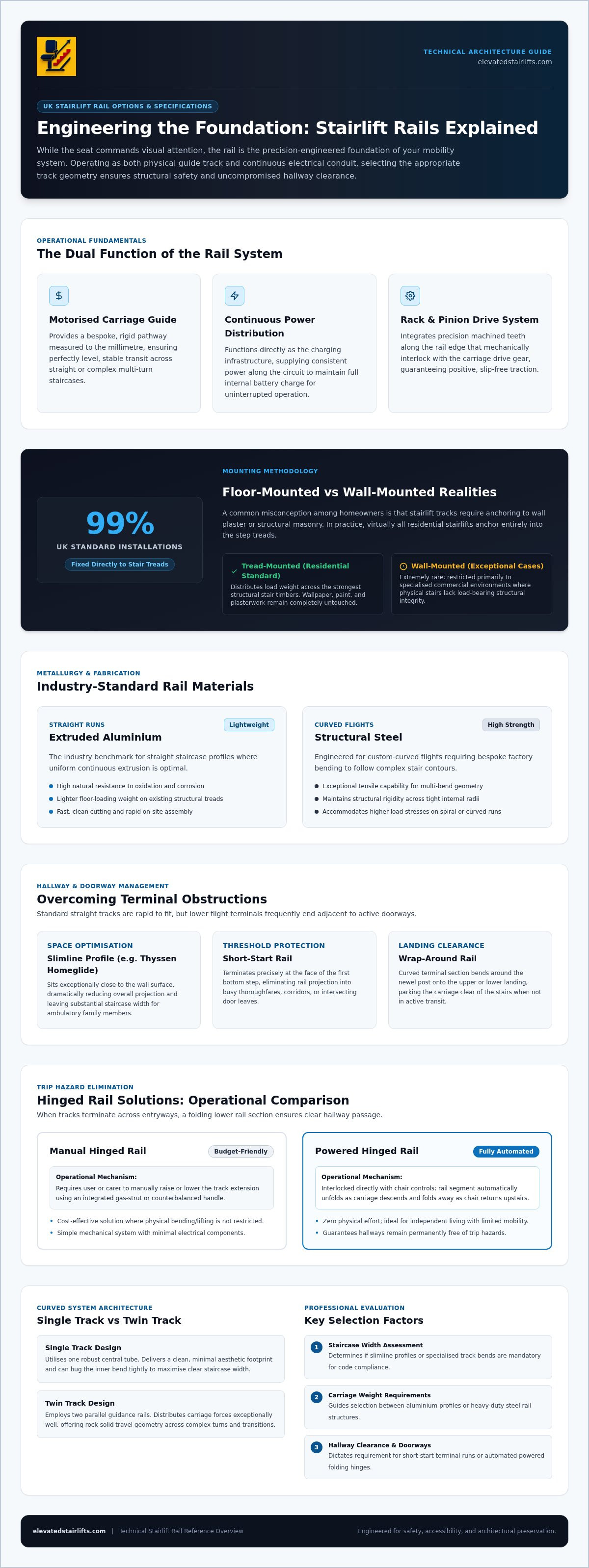
What exactly is a stairlift rail? While the chair often gets all the attention, the rail is the technical heart of the system. It serves as both the track that guides the motorised carriage and the power source that keeps the internal batteries charged. Choosing between different stairlift rail options means selecting the foundation for your daily mobility. Unlike the seat, which is often a standard model, the rail is the most customised component. It must be measured to the millimetre to ensure a safe, smooth ride that fits your specific staircase.
Industry standards favour aluminium and steel for their exceptional durability. Aluminium is frequently chosen for straight runs because it's lightweight and resistant to corrosion. Steel provides the necessary strength for complex, curved tracks that require bespoke bending. These materials support the rack and pinion system, which is a series of small teeth on the rail that lock into a gear on the chair. This mechanism ensures a slip-free journey, giving you total confidence as you move between floors. Understanding stair lift rail design and configurations helps you see why these robust materials are non-negotiable for long-term reliability and safety.
Floor-Mounted vs Wall-Mounted Rails: Dispelling the Myths
One of the most common worries we hear is whether an installation will ruin the walls or require major structural work. In reality, 99% of stairlift rails in the United Kingdom are fixed directly to the stair treads. This floor-mounting method is significantly safer because it distributes weight through the strongest part of your staircase. It also means your wallpaper and plasterwork remain completely untouched. Wall-mounting is very rare; it's typically only considered in specific commercial settings where the stairs themselves cannot support the weight of the unit.
The Aesthetic Impact of Rail Choice
You don't have to sacrifice your home's style for accessibility. Modern stairlift rail options include slimline designs, such as the Thyssen Homeglide, which sits incredibly close to the wall to leave plenty of room for other family members to walk past. While many rails come in a standard neutral finish, the colour and finish can often be coordinated with your home decor. This thoughtful approach ensures the lift feels like a natural addition to your hallway rather than an industrial fixture. Choosing a slimline track is often the best way to minimise the visual footprint in narrower homes.
Straight Stairlift Rail Options: Dealing with Hallway Obstructions
Straight staircases are usually the most straightforward to equip, but they often present unique challenges at the top or bottom of the flight. Standard straight rails are the most cost-effective and quickest to install, yet they require careful planning to avoid creating a trip hazard. If your staircase ends near a doorway or a narrow hallway, the rail might protrude into the walking path. This is why a professional survey is so important. An occupational therapy home assessment often highlights these safety concerns, ensuring that the final installation doesn't compromise the safety of other household members.
For homes with particularly tight spaces, the Thyssen Homeglide is an excellent choice. It excels in straight rail applications because of its slimline profile. This design sits close to the wall, leaving more room for others to use the stairs. When you're exploring stairlift rail options, you should also consider how the rail starts and ends. You might choose a short-start rail that finishes exactly at the first step, or a wrap-around option if space at the top is limited. If you're unsure which setup fits your hallway, you can send us a photo via WhatsApp for a quick, expert assessment.
The Hinged Rail Solution: Manual vs Powered
A hinged rail is essential when a doorway is located at the foot of the stairs. This mechanism allows the lower section of the track to fold away when the lift isn't in use. Manual hinges are a budget-friendly option, but they require the user or a carer to physically lift or lower the rail. Powered hinges offer maximum convenience, as they fold and unfold automatically as the chair moves. This ensures the hallway remains clear and safe at all times without any physical effort from you.
Slide Track and Split Rail Alternatives
If a hinge isn't suitable, a slide track might be the answer. These tracks move along with the chair, keeping both the top and bottom of the stairs clear when the lift is parked. This is a brilliant solution for hallways that are busy or exceptionally narrow. Additionally, split rails are often used during the installation process in tight spaces. They arrive in two pieces, making them easier to transport and fit into homes with restricted access. Finding the right balance between accessibility and floor space is much easier when you have professional guidance.
Curved Stairlift Rail Configurations: Single vs Twin Tracks
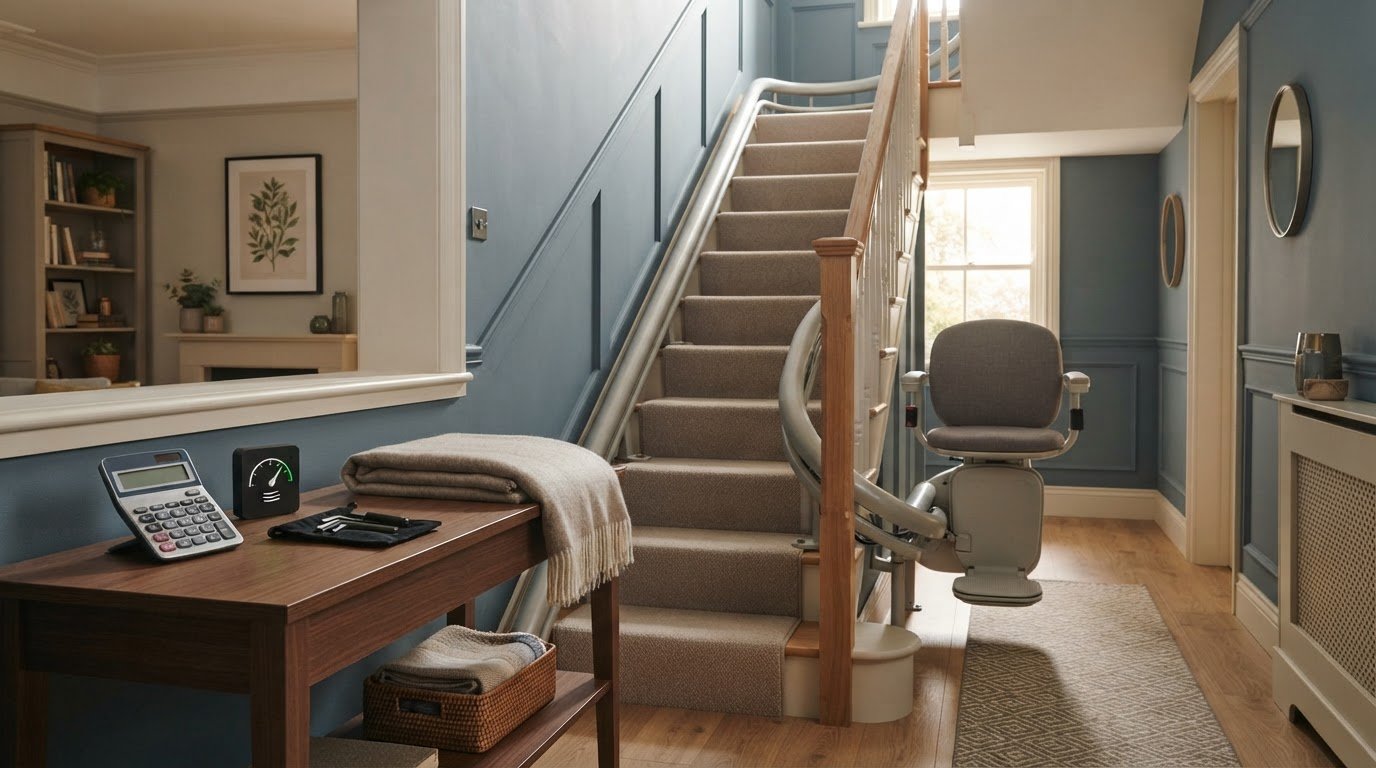
Curved staircases present a unique set of challenges that off-the-shelf solutions simply can't meet. Unlike straight runs, curved stairlift rail options require bespoke manufacturing based on precise measurements of your home. Engineers must account for every 90 or 180-degree turn, as well as any intermediate landings that require the lift to travel across a flat surface before climbing again. This level of customisation ensures the carriage moves smoothly without any jarring transitions. Because each rail is fabricated specifically for one staircase, the lead time is naturally longer than it's for straight models. It's a meticulous process, but it guarantees a perfect fit that feels secure and stable from the first day of use.
For homes with multi-level curves or particularly tight bends, the Stannah 260 is a standout choice. It's engineered to navigate complex geometry whilst maintaining a slim profile that respects your living space. If you're concerned about the costs associated with these more sophisticated systems, it's worth checking if you're eligible for Disabled Facilities Grants. These government-backed funds can provide vital financial support for essential home adaptations, making bespoke curved installations more accessible for those who need them most.
The Twin Rail System: Stability and Tradition
The twin rail system is a classic design often seen in Stannah installations. It features two parallel tubes that run along the staircase, providing exceptional weight distribution and a reassuring sense of sturdiness. This configuration is particularly effective for users who prioritise a feeling of absolute stability whilst in motion. However, some homeowners find that the twin-tube design can appear slightly more industrial. It may also take up a bit more vertical space on the stairs, which is an important consideration if you have a lower banister or decorative wall features you wish to preserve.
The Single Rail System: Modern and Discreet
Single rail systems offer a more modern and minimalist alternative. By using one thicker, high-strength tube, these rails can support the same weight capacities as twin-tube models without the extra bulk. This creates a cleaner look that many people find more aesthetically pleasing in a domestic setting. Beyond the visual benefits, single rails often provide a tighter turning circle. This makes them an ideal choice for very narrow bends where every millimetre of clearance matters. Choosing between these stairlift rail options often comes down to a balance between your personal style preferences and the specific technical requirements of your staircase.
Key Factors Influencing Your Rail Selection
Selecting the right track involves looking beyond the staircase itself. Your home's unique layout and your own physical needs are the two most important guides. Staircase width is often the primary constraint. If your stairs are narrow, you'll need a slimline rail to ensure there's enough clearance for your knees and for other family members walking past. Weight capacity also plays a vital role in this decision. Heavier loads require reinforced rail supports to maintain absolute stability and long-term reliability. We always prioritise your safety, ensuring the stairlift rail options we suggest are robust enough for your specific requirements.
Physical obstructions are another critical factor. Radiators, low-hanging newel posts, or doorways at the top of the flight can all dictate the path the rail must take. Sometimes, a rail might need to "overrun" onto a landing to ensure you can disembark safely away from the edge of the stairs. User mobility is the final piece of the puzzle. If bending down is difficult, features like a powered hinge or a specific rail start position can make a world of difference to your daily comfort. We're here to help you weigh these factors without any pressure, focusing solely on what makes your life easier.
Measuring for Success: The Importance of Accuracy
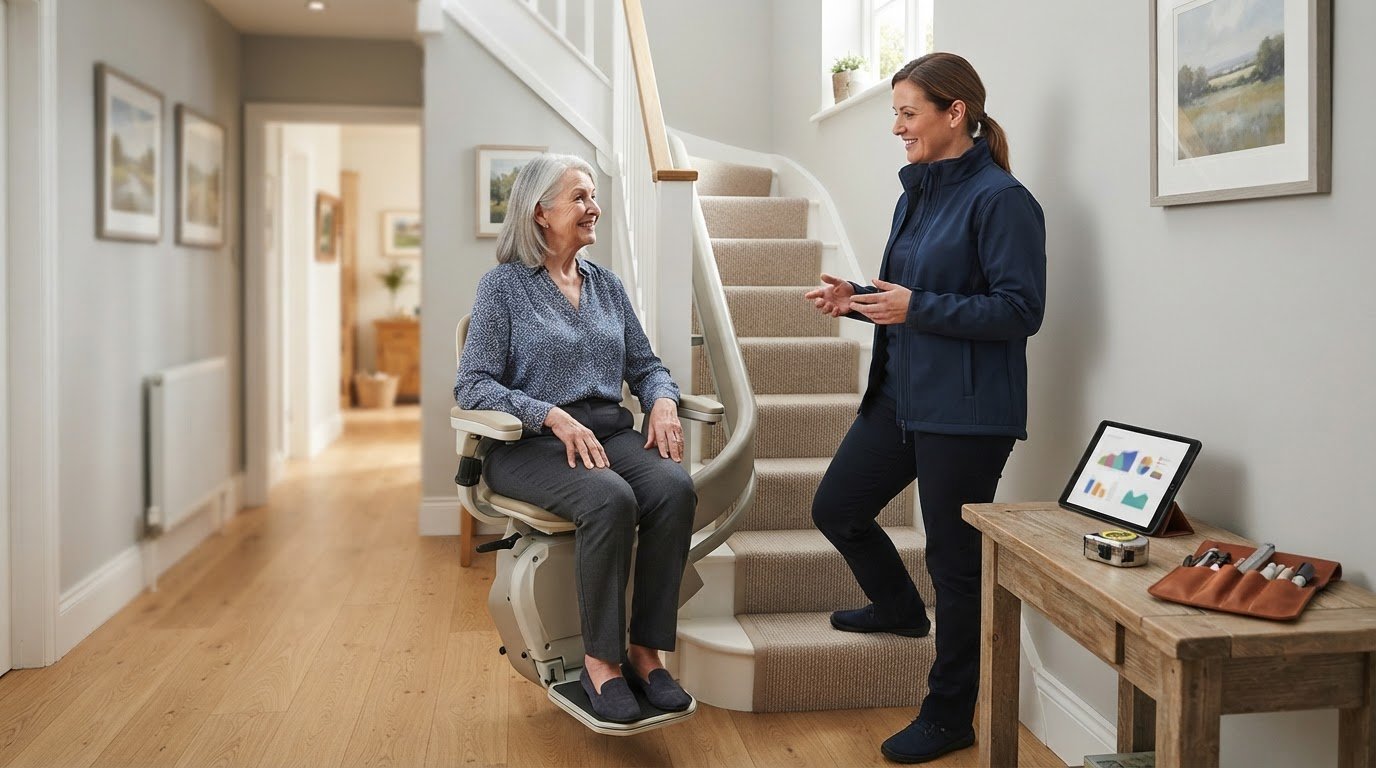
Accuracy is everything when it comes to a smooth ride. DIY measurements are incredibly risky because even a few millimetres can cause issues with the installation or the chair's movement. Professional installers use advanced digital survey tools to create a perfect map of your staircase. This technology accounts for every slight variation in the treads and the pitch of the stairs. If you're just starting your journey, our WhatsApp photo assessment is a wonderful, low-friction first step. By sending a few photos of your stairs, you can get expert advice on which rail configurations will work best for your home.
Safety Features Integrated into the Rail
The rail is far more than just a piece of metal; it's an active part of your safety system. It houses mechanical end-stops and electrical final limits that prevent the carriage from ever travelling too far. Charging points are also integrated directly into the track. This ensures the lift's batteries are constantly topped up, so it remains fully operational even during a power cut. Additionally, the rail works in harmony with safety sensors on the carriage. If an object like a pet or a stray shoe is detected on the track, the lift will come to a gentle, immediate stop. This level of thoroughness provides the peace of mind you deserve. If you're ready for clear, expert guidance, you can request a professional rail survey to find the perfect fit for your home.
Professional Fitting and Bespoke Rail Solutions
Once you've selected the right track for your home, the focus shifts to the installation itself. A professional stairlift installation is the only way to ensure the perfect alignment of your rail. If the track isn't fitted with millimetre-precision, you might experience a bumpy ride or unnecessary wear on the motorised carriage. Most straight rail fittings take between two and four hours, whilst curved bespoke systems may take a little longer due to their complexity. Our engineers work methodically to ensure every bracket is secure and the rail is perfectly level before you ever take your first trip.
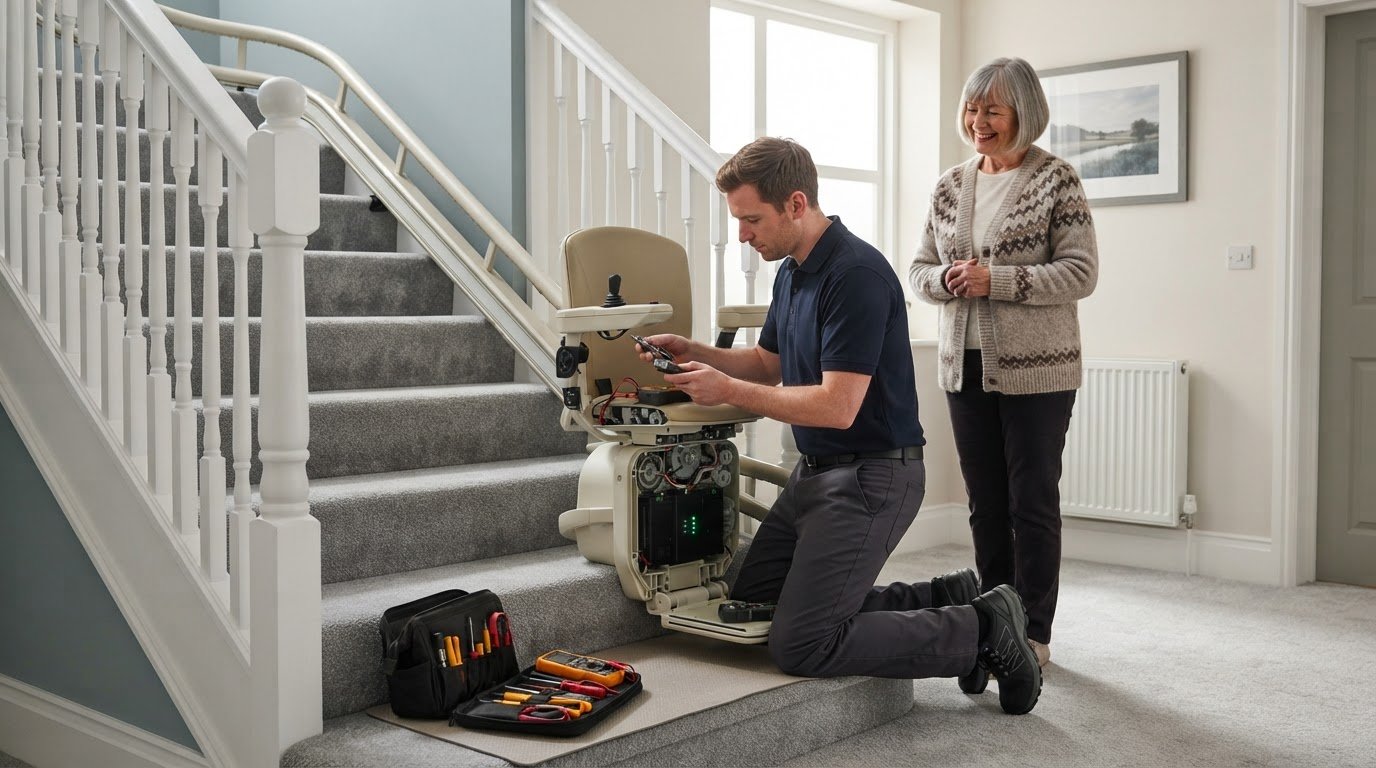
After the physical fitting is complete, we perform rigorous post-installation checks. We test the rail for absolute smoothness and stability, ensuring the safety sensors and charging points are functioning correctly. Long-term care is equally vital for the life of your unit. Regular stairlift maintenance keeps the rail rack clean and properly lubricated. This prevents dust buildup in the teeth of the track, which is essential for a quiet and reliable journey every single day.
Preparing Your Home for Rail Installation
You can help the process run smoothly by making a few simple preparations. Please clear the staircase of any ornaments, photos, or loose rugs before the fitters arrive. This gives our team a safe environment to work in and protects your belongings. It's also helpful to ensure there's a standard power socket available near either the top or the bottom of the stairs. Don't worry about your carpets; the rail feet are designed to sit securely on various floor types, from thick pile to hard wood, without causing permanent damage.
Why Choose ElevatedStairlifts for Your Rail Solution?
We pride ourselves on being specialists in both Thyssen Homeglide and Stannah 260 systems. This dual expertise allows us to offer honest, low-pressure advice on the best stairlift rail options for your specific staircase. We aren't here to push a sale; we're here to restore your independence with a solution that fits your budget and your home. With national support for rail repairs and breakdown services across the UK, you can trust that we'll be there whenever you need us. If you're ready to take the next step, you can request a free rail assessment via WhatsApp today by simply sending us a photo of your stairs.
Securing Your Independence with the Right Rail
Selecting the right track is about more than just fitting a machine to your stairs; it's about creating a safe and unobtrusive path that restores your freedom at home. We've explored how different stairlift rail options, from the slimline Thyssen Homeglide to the bespoke Stannah 260, can solve even the most complex layout challenges. Whether you need a powered hinge to clear a doorway or a twin-tube curved track for maximum stability, the technical details matter for your long-term comfort. A professional survey is the only way to ensure millimetre-perfect alignment and peace of mind.
As specialists in these leading systems, we provide national UK coverage and a dedicated expert breakdown service to keep you moving. You don't have to navigate these decisions alone. Our team is ready to offer clear, honest guidance that prioritises your well-being over a sales pitch. We're here to simplify the process and ensure your home remains a place of comfort. To start your journey with expert advice, you can Get a Free Stairlift Rail Assessment via WhatsApp today. We look forward to helping you regain your autonomy with confidence and ease.
Frequently Asked Questions
Will a stairlift rail damage my wall or wallpaper?
A stairlift rail won't damage your wall or wallpaper because it's fixed directly to the stair treads rather than the plasterwork. This floor-mounting method is the standard for 99% of installations in the United Kingdom. Your wallpaper and paint remain completely untouched during and after the fitting. Because the weight is supported by the stairs themselves, the installation is both structurally sound and aesthetically sympathetic to your home's decor.
Can I have a stairlift if I have a doorway at the bottom of the stairs?
You can certainly have a stairlift even if there is a doorway at the foot of your stairs. To resolve this, we use a hinged rail that can be folded away when the lift isn't in use. This prevents the track from becoming a trip hazard or blocking access to the room. It's one of the most common stairlift rail options for older British homes where space in the hallway is often restricted.
What is the difference between a manual and a powered hinged rail?
The main difference lies in how the folding section is operated. A manual hinged rail requires the user or a carer to physically lift or lower the track by hand. In contrast, a powered hinged rail is fully automated. It moves up and down on its own as the chair travels, which is a safer and more convenient choice for users with limited strength or those who live independently without a resident carer.
How much space does a stairlift rail take up on the stairs?
Most stairlift rails sit approximately 15cm to 20cm from the wall. Slimline models, such as the Thyssen Homeglide, are designed to be as unobtrusive as possible, leaving plenty of room for other family members to walk up and down the stairs. The exact space required depends on your staircase's width and the specific rail design you choose. We use precise measurements to ensure the best possible fit for your hallway.
Can a stairlift rail be fitted to any type of staircase material?
Yes, stairlift rails can be fitted to almost any staircase material, including wood, concrete, and even metal. The fixing brackets are designed to grip the treads securely regardless of the underlying structure. Whether your stairs are covered in carpet or are made of solid oak, the installation process remains straightforward. Our engineers use specialised fixings to ensure the rail is stable and safe, providing a reliable foundation for your mobility.
Do curved stairlift rails take longer to install than straight ones?
Curved stairlift rails do take longer to install than straight ones. A typical straight installation might be completed in about two to four hours, whereas a curved system, like the Stannah 260, usually requires a full day. This is because curved rails are bespoke and often come in multiple sections that must be perfectly aligned and joined. The added complexity of navigating corners and landings requires a more meticulous fitting process.
Is it possible to have a rail that goes around a corner onto the landing?
It's entirely possible to have a rail that continues around a corner and onto the landing. This is often called a parking curve. It allows the chair to stop well away from the top of the stairs, making it much safer and easier for you to get on and off. Exploring these stairlift rail options is particularly useful if your landing is narrow or if you want the lift parked out of sight.
What happens to the rail if there is a power cut?
If there is a power cut, your stairlift will continue to work. The rail contains charging points that keep the chair's internal batteries topped up at all times. This means you won't be stranded between floors if the electricity goes out. The batteries typically provide enough power for several return journeys, ensuring you can always reach safety. Once the power is restored, the rail will automatically begin recharging the unit again.
Comments