Stairlift Safety Features: A Practical Checklist for Safer Use
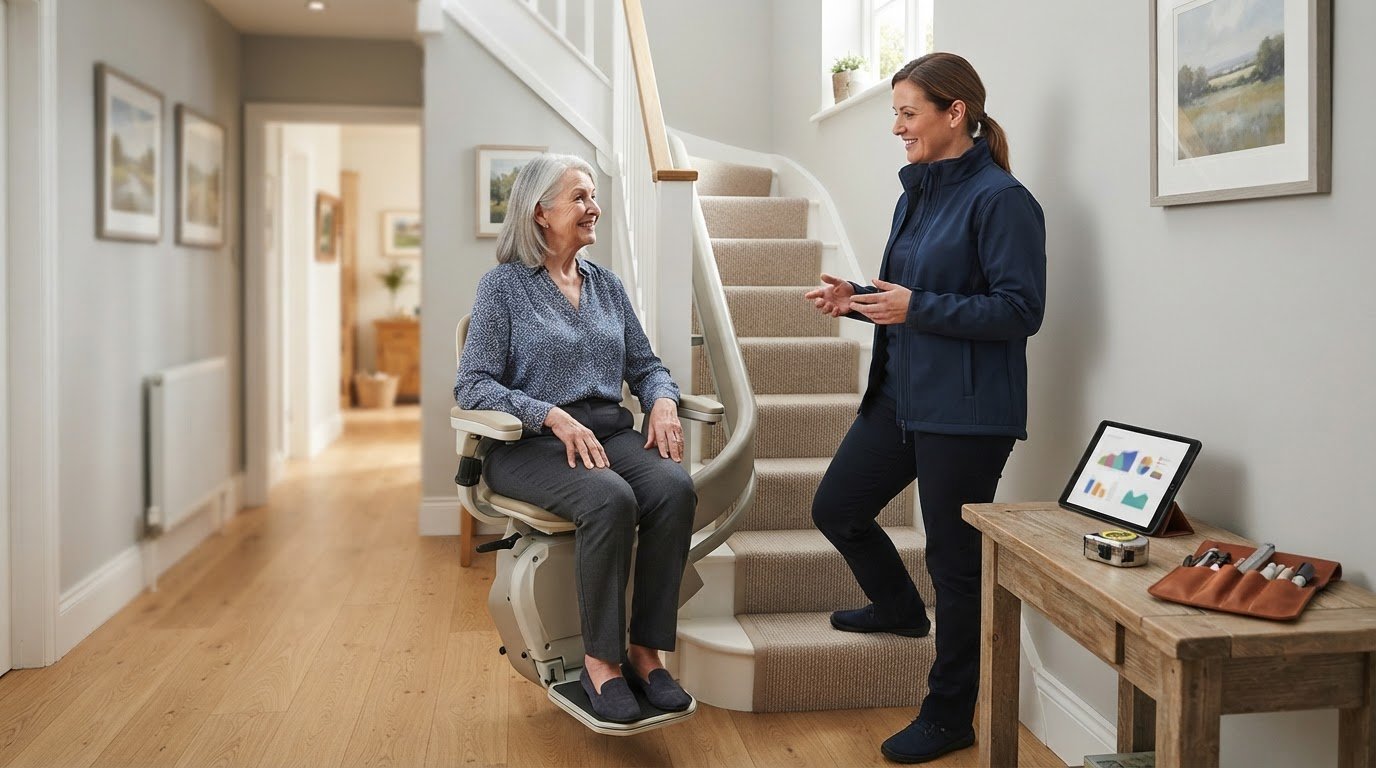
What should happen if a stairlift meets an obstruction, or its seat isn’t positioned securely? Knowing how stairlift safety features are designed to respond can make everyday journeys feel more reassuring. But no single feature removes every risk, and the equipment needs to be used as instructed.
It’s understandable to wonder which safeguards matter most, whether the lift could move unexpectedly and what to do if something doesn’t seem right. Obstruction sensors, seatbelts, swivel-seat locks and emergency stops can serve different purposes, but availability varies by model. Check your manufacturer’s instructions or ask your installer which features your stairlift has, where to find them and how to use them.
This practical checklist explains common safety features and what they’re intended to do, then takes you through simple checks before each journey. You’ll also learn which signs mean you should stop using the stairlift and seek professional advice. If you suspect a fault, don’t investigate or repair it yourself. Contact a stairlift professional for servicing or repair support.
Table of Contents
Stairlift safety features: what they do and what they cannot guarantee
Could a stairlift move when it shouldn’t, or fail to respond to something in its path? It’s reasonable to want clear answers. Safeguards are designed to help manage particular risks, but they can’t prevent every incident or replace careful use, a suitable installation and ongoing maintenance.
A stairlift safety feature is a design element or control intended to help prevent harm or unsafe operation. A feature can support safer use, but its availability and operation depend on the stairlift model. Knowing what your equipment has and how it should be used is more helpful than assuming every stairlift works in the same way.
How built-in stairlift safeguards support everyday use
Depending on the model, safeguards may help manage movement, the user’s position or obstacles on the stairs. For example, a seat-position switch may prevent operation when the seat isn’t correctly positioned. A sensor may be designed to stop the lift if it detects an obstruction. These features have specific roles. They don’t replace sitting securely, using the controls as instructed or keeping the route clear.
Before setting off, get comfortably seated and check you can reach the controls without stretching. The Stair lift overview describes components such as swivel seats and position-related safety switches, but your stairlift may differ. Follow the operating instructions supplied with your equipment on every journey, including instructions for getting on and off.
Why safety features differ between stairlift models
Stairlift designs, controls and fitted options vary between manufacturers and models. Even features that sound similar may work differently, or have different locations and reset procedures. Don’t assume a safeguard is fitted because you’ve seen it on another stairlift, or because a model has a similar name.
Check your manual for the features on your specific equipment and how to use them. If the instructions aren’t available, or you’re unsure what’s fitted, ask your installer or the manufacturer. This is particularly useful after installation, servicing or repair.
Built-in safeguards are only one part of dependable use. A suitable installation, following the instructions and arranging maintenance in line with the manufacturer’s guidance all matter. If a feature appears damaged, behaves unexpectedly or doesn’t work as described, don’t dismantle or repair it yourself. Stop using the stairlift and seek professional advice.
Seat belts, swivel seats and controls: check the features around the user
Features around the seat help the user get positioned and operate the lift, but they don’t replace careful use. User-positioning features help support how someone sits or gets on and off; movement-control safeguards govern whether or how the stairlift moves. Which features are fitted, and how they work together, depends on the model.
Before each journey, consider whether the user can sit comfortably, keep a stable position and reach the controls without stretching. If their needs or mobility have changed, don’t assume the current setup is still suitable. Check the instructions and ask the installer or manufacturer if you’re unsure.
Seat belts and safe seating position
If the stairlift has a seat belt, use it as directed by the manufacturer. Before setting off, check for visible damage, make sure the fastening works as described and confirm the belt fits comfortably. Position it according to the model’s instructions. Don’t twist it or force it into place.
If the belt won’t fasten, feels damaged or doesn’t fit the user correctly, don’t use the stairlift until you’ve sought advice. A belt is one of several stairlift safety features. It isn’t a substitute for sitting as instructed or following the operating guidance.
Swivel seats, armrests and operating controls
A swivel seat may help the user turn towards the landing when getting on or off, but the safe method and sequence vary. Some designs may have an interlock that affects operation when the seat is turned. Follow the manual for when and how to swivel the seat, and whether it must be returned to a particular position before travel.
Check that the armrests are in the position specified in the instructions and that the user can reach and understand the controls. If they use a remote control, make sure they know how it operates and where it should be kept. Start the lift only when the user is seated comfortably and has completed the required steps.
Not sure which belt, seat or control arrangement your stairlift has? The manual is the best place to confirm the model-specific sequence. If it’s missing or unclear, ask the installer or manufacturer. For help with stairlift servicing or a suspected fault, you can also contact a stairlift service provider.
Safety sensors and stopping features: how stairlifts respond to obstacles
What happens if something is left on the stairs in the stairlift’s path? Some stairlifts have obstruction sensors designed to interrupt movement when they detect an obstacle. This can help address a specific hazard, but sensors aren’t a guarantee against every obstruction or incident. Their presence, position and response depend on the model.
These stairlift safety features may be located in different parts of the equipment, so don’t assume a sensor will detect an object in every position. The lift may stop and need a particular reset procedure, or show an indicator described in the manual. Follow the instructions for your model rather than guessing what a light, sound or stop means.
What obstruction sensors are designed to do
A sensor may detect contact with, or the presence of, an obstruction and interrupt the lift’s movement. For example, an item on the route could prompt the stairlift to stop rather than continue travelling. A stop may simply mean something needs checking; it doesn’t automatically mean there’s a serious fault.
Never test a sensor by putting an object in the stairlift’s path. That could create a hazard or affect the equipment. Check the manual for sensor locations, indicators and manufacturer-approved reset steps. If the instructions don’t explain what’s happened, ask the installer or manufacturer for guidance.
What to do if a stairlift stops unexpectedly
If the lift stops while someone is using it, stay calm. The user should remain seated and follow the manufacturer’s instructions, provided it’s safe to do so. Don’t try to force the stairlift to move or get off on the stairs unless the instructions advise this and it can be done safely.
Only check for an obvious obstruction if it’s safe and the manual permits it. Keep clear of moving parts, and don’t dismantle the lift or reach into areas that aren’t intended for user checks. If the route appears clear but the stairlift remains stopped, use only the reset procedure given for that model. Don’t repeatedly restart it if the issue continues.
If you can’t identify the cause, the stop happens again, or the equipment behaves unusually, stop using the stairlift and contact a stairlift professional. Professional repair or servicing support is the appropriate next step when a fault is suspected. A sensor can help manage certain risks, but it can’t identify every hazard, so keep the route clear and follow the operating instructions on each journey.
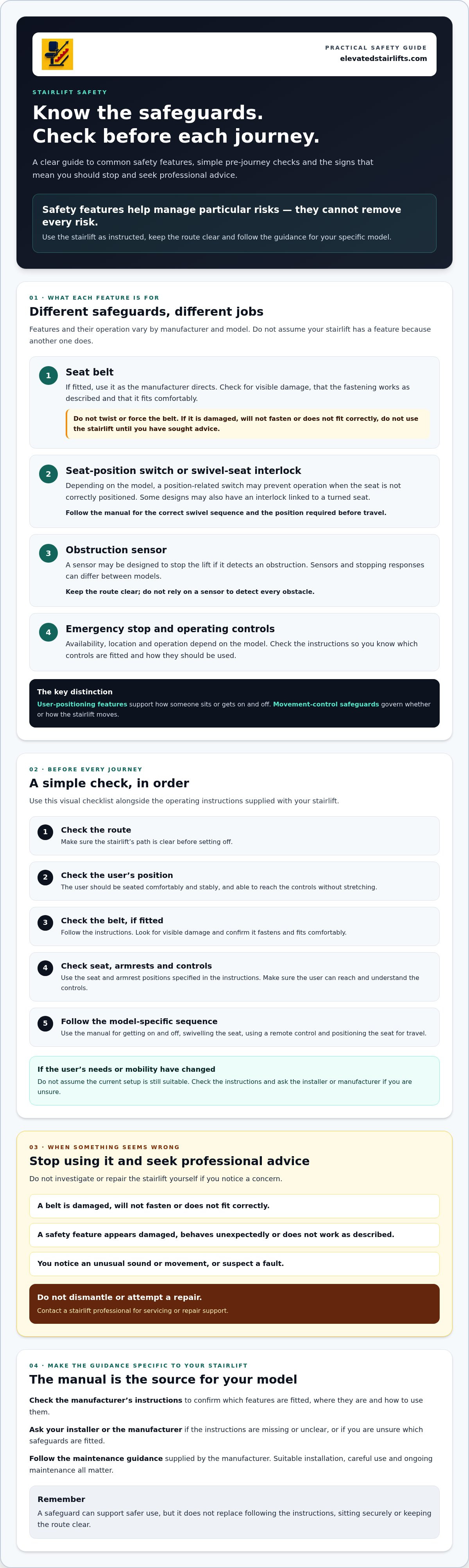
A stairlift safety checklist to use before each journey
A quick look before setting off can help you notice obvious issues without turning a daily journey into a technical inspection. This checklist covers visual, user-appropriate checks only. It doesn’t replace the manufacturer’s instructions or professional servicing. Don’t dismantle, adjust or repair any part of the stairlift yourself.
Quick checks before getting on
Pause at the landing and check the route from top to bottom. Make sure the stairway and landing are clear, lighting is adequate and the seat is ready to use. Keep pets, loose items and other obstacles away from the track and travel path.
Look over the user-facing parts: Check the seat, armrests, belt if fitted, and controls for visible damage or anything that looks out of place. Don’t touch internal parts.
Check the user is ready: Make sure they can sit comfortably and securely, and can reach and understand the controls.
Follow the correct starting steps: Use the sequence in the manual, including any instructions for the seat, belt or controls.
A steady routine can make it easier to spot a change from normal. For broader ideas about reducing risks around the home, see this stairlift falls-prevention guide.
When to pause use and ask for professional help
Don’t use the stairlift if you see damage to the seat, belt, armrests or controls, or if anything appears loose or out of place. Unexpected stopping, unusual movement or a change in how the lift operates are also reasons to pause. Don’t repeatedly try to make equipment that seems faulty move. Follow the manual and seek advice instead.
Keep checks simple. If the cause isn’t obvious or a problem returns, stop using the stairlift and contact a stairlift professional. For ongoing care guidance, read the stairlift maintenance guide. If you suspect a fault, ask about stairlift repair support rather than trying to fix it yourself.
Keeping stairlift safety features dependable: instructions, servicing and support
A safety feature can only help as intended if it’s in good condition and used correctly. Knowing that a stairlift has a belt, sensor or control safeguard is only part of the picture. The manufacturer’s instructions explain how to use those features, while servicing and professional advice can help address concerns beyond everyday checks.
Use the manual and model information as your reference
Make a note of the stairlift’s make and model, and keep its operating instructions somewhere easy to find. The manual can confirm which stairlift safety features are fitted, explain what indicators mean and set out approved actions if the equipment stops or behaves differently.
If the instructions don’t answer a safety question, check with the installer or manufacturer rather than relying on advice for another model. For wider considerations about using a stairlift at home, see this independent living stairlift guide.
When professional stairlift support is the safer next step
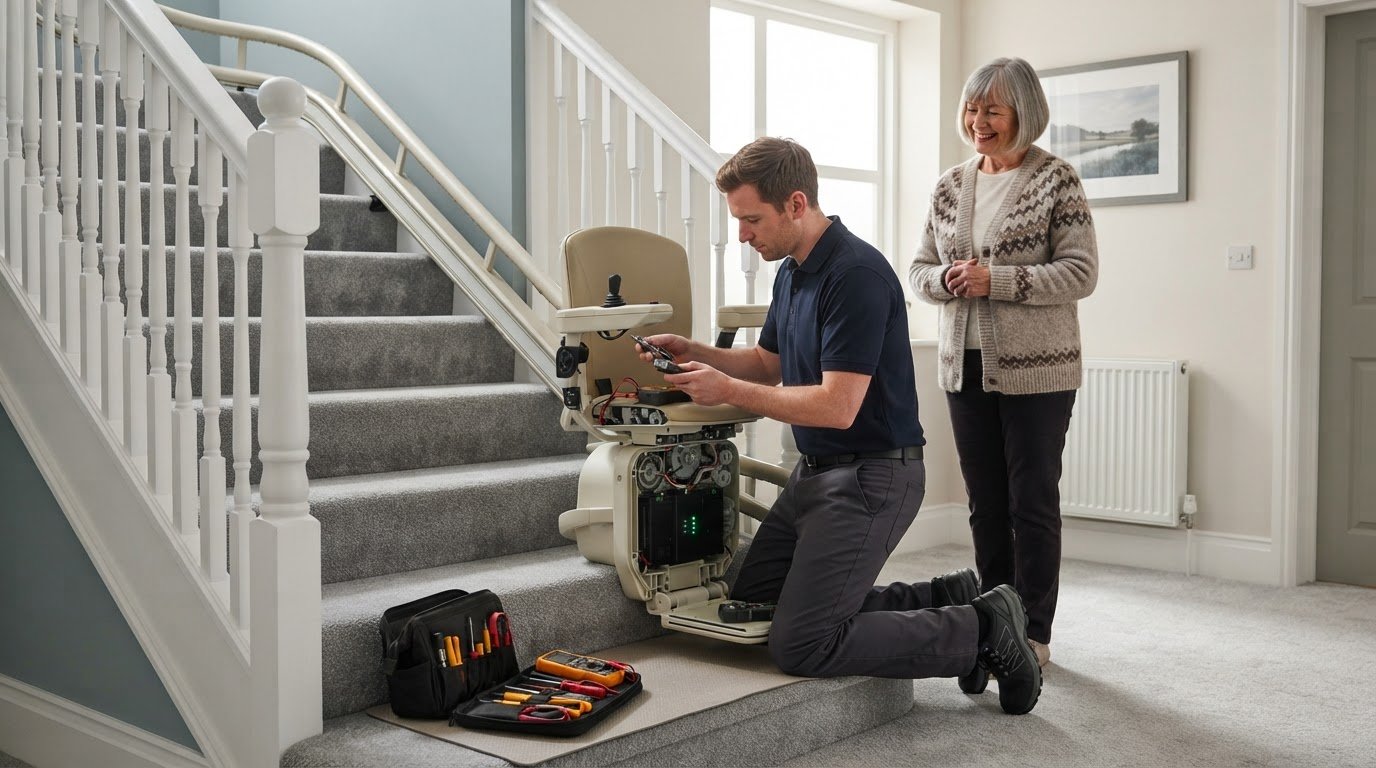
Visual checks, such as looking for obvious damage or keeping the route clear, are suitable user checks. Repairs, adjustments and inspections of internal components are different. Don’t remove covers, attempt a repair or change a setting unless the manufacturer’s instructions specifically say it’s a user action.
Arrange professional advice if a feature appears damaged, an indicator remains unclear, or the stairlift repeatedly stops or moves unusually. Follow the manufacturer’s maintenance guidance for your particular model; don’t assume there’s one servicing interval for every stairlift. Routine service support can help address issues that a quick pre-journey check won’t reveal.
ElevatedStairlifts provides stairlift installation, servicing and repair support, including installation of the Thyssen Homeglide and Stannah 260. Suitability depends on the equipment. If you’re uncertain about a fault or need help with your stairlift, contact ElevatedStairlifts for stairlift support.
Make safer stairlift use part of your routine
Understanding stairlift safety features helps you know what your equipment is designed to do, but safeguards work alongside careful use, clear access and appropriate maintenance. Before each journey, check the route and user-facing parts, follow the model’s instructions, and pause if you notice damage, unexpected stopping or unusual movement. If you’re unsure which features are fitted, confirm the details with the manual, installer or manufacturer.
Suspected faults are best left to a professional. ElevatedStairlifts provides stairlift installation, servicing and repair support, and works with the Thyssen Homeglide and Stannah 260. Features can vary, so ask about the specific equipment rather than assuming what it includes.
For guidance on your stairlift or support with a concern, contact ElevatedStairlifts for a free, no-obligation quote. You can provide staircase photos via WhatsApp or email. A few straightforward checks and the right advice can help you feel more confident about each journey.
Frequently Asked Questions
What safety features should a stairlift have?
There isn’t one feature list that applies to every stairlift. Depending on the model, safeguards may include a seat belt, controls designed to prevent unintended operation, or sensors that stop movement when an obstruction is detected. Check the manual to see what’s fitted and how each feature works. A stairlift’s suitability also depends on correct installation, careful use and maintenance in line with the manufacturer’s guidance.
Do stairlifts have sensors to stop if something is in the way?
Some stairlifts have obstruction sensors designed to stop movement if they detect an obstacle. Their locations and responses vary, and a sensor might not detect every hazard. Keep the route clear rather than relying on the sensor, and don’t test it by placing an object in the stairlift’s path. If the lift stops, consult its manual for the meaning of any indicator and the approved steps to take.
Is it safe to use a stairlift without wearing the seat belt?
If your stairlift is fitted with a seat belt, use it as directed in the manufacturer’s instructions. Check that it fastens and fits correctly before setting off. Don’t use the stairlift if the belt appears damaged or won’t fasten; seek advice from the installer or manufacturer. If you’re unsure whether a belt is fitted or required for your model, check the manual rather than assuming it’s optional.
Can a stairlift be used during a power cut?
It depends on the stairlift. Some models may have a battery system that allows operation during a power cut, whilst others may not, or may have limits on how they operate. Check the manual for your model’s guidance on power loss, battery status and what to do if the lift stops. Don’t assume it will continue to work, and never attempt to access or service electrical components yourself.
What should I do if my stairlift stops on the stairs?
Stay calm and, if safe, remain seated whilst you consult the manufacturer’s instructions. Follow only the steps approved for your model, including any guidance about indicators or resetting the lift. Check for an obvious obstruction only if it’s safe and the manual permits it. Don’t force the stairlift to move or repeatedly restart it. If the cause is unclear, the problem recurs or the lift behaves unusually, stop using it and contact a stairlift professional.
How often should a stairlift be serviced for safety?
Follow the servicing schedule in the manufacturer’s guidance, as there isn’t one interval that can be assumed for every stairlift. The recommended timing may depend on the model and its instructions. Routine visual checks before use don’t replace professional servicing. If you notice damage, unusual movement, repeated stopping or another change in operation, don’t wait for a scheduled service. Stop using the lift and seek professional advice.
Are stairlift safety features the same on every model?
No. Stairlift safety features, controls, indicators and reset procedures can differ between models and manufacturers. A feature you’ve seen on another stairlift may not be fitted to yours, or may operate differently. Check the manual for your exact model, and ask the installer or manufacturer if anything is unclear. This is particularly important after installation or repair, so you understand which safeguards are present and how to use them correctly.