Stairlift Weight Capacity UK: How to Choose Safely in 2026
Could a stairlift that appears to support your weight still be the wrong fit? Stairlift weight capacity UK figures can be confusing, especially when limits vary between models and manufacturers. It’s also reasonable to want clear answers about safety and comfort without feeling judged for asking.
A stairlift’s stated maximum load applies to a particular model. But the user’s weight alone may not tell you whether it’s suitable: the staircase, rail and installation details matter too. Choosing a capacity isn’t about guesswork or simply picking the biggest number. It’s about checking the right information for the person and their home.
This guide explains what a maximum load means and what to compare before deciding. You’ll learn which manufacturer details to check, why the staircase can affect the options available, and what to discuss about fit and installation. If anything is unclear, professional advice can help you check a particular model and home against the manufacturer’s information, without pressure to decide before you’re ready.
Table of Contents
What does stairlift weight capacity mean in the UK?
A stairlift’s stated weight capacity is the manufacturer-specified maximum load for a particular model. This is the starting point when checking stairlift weight capacity UK information: the figure applies to an individual model, not every stairlift on the market.
There isn’t one capacity figure that safely describes all stairlifts. Specifications differ between models and manufacturers, so a figure in a general online guide may not apply to the lift you’re considering. Check the current manufacturer documentation for the exact model rather than relying on a broad estimate or an old comparison.
Keep verified specifications separate from assumptions. A label such as “standard” or “heavy-duty” may describe a product category, but it doesn’t confirm a particular model’s maximum load. Nor does the rating alone tell you whether the seat, controls and access will feel comfortable for the person using the lift.
Is there one standard stairlift weight limit?
No single limit applies to every stairlift. Permitted loads vary by model and manufacturer, so don’t use a figure from another product as a substitute for the chosen model’s specification. Check the current documentation and make sure it identifies the exact model. Category descriptions such as “standard” or “heavy-duty” aren’t a replacement for a verified figure.
What does a maximum load rating tell you?
The rating gives the maximum load specified for that model. It’s a limit, not a personalised assessment or a promise that every user will find the lift suitable. The number doesn’t describe seat dimensions, posture, comfort or how easily someone can transfer on and off.
For example, two people whose weights are within a model’s stated limit may still have different needs for seating space or access. Ask the manufacturer or installer to confirm how the rating applies to the exact model and chosen configuration, then consider those practical needs separately. A professional can help assess the proposed lift and staircase, but their advice should complement, not replace, the manufacturer’s capacity information.
How to read a stairlift weight capacity and model specification
Start with the documentation for the exact stairlift you’re considering. A capacity figure is useful only if you can confirm which model and configuration it applies to. For a reliable stairlift weight capacity UK comparison, work through this checklist:
Identify the exact model and any configuration details shown in the product information.
Find current manufacturer documentation, rather than relying on a general product description or old listing.
Confirm the stated maximum load and check whether the documentation explains any operating conditions or other limits.
Ask how the rating applies to the chosen configuration and the person’s intended use.
Retailer descriptions can help you identify a product, but check their claims against the manufacturer’s current information. Comparison-site figures may lack context, refer to a different version or be out of date. If two sources disagree, don’t guess which one is right. Ask the manufacturer or installer to clarify the figure for the exact model, preferably in writing, so you have a clear reference before deciding.
Which details should you check in the manufacturer information?
Match the full model and configuration name before comparing ratings. Read the notes around the maximum-load figure as well: the documentation may explain conditions or other limits that affect how the rating applies. If the details aren’t clear, ask the manufacturer or installer to confirm them. A written answer can help prevent a general product description from being mistaken for model-specific guidance.
Why can two stairlifts have different stated capacities?
Different models have different specifications, so one stairlift’s rating shouldn’t be used to estimate another’s. ElevatedStairlifts installs the Thyssen Homeglide and Stannah 260, but that alone doesn’t confirm either model’s capacity. Check the current manufacturer documents for the particular model and configuration. For more on the fitting process, see this guide to professional stairlift installation.
If the lift is for a workplace rather than a private home, check which requirements apply to that setting. The Health and Safety Executive provides guidance on the Lifting Equipment Regulations (LOLER); don’t assume workplace rules apply to a domestic installation.
Still unsure what documentation to request? You can ask ElevatedStairlifts about model and installation checks. Treat professional advice as a way to confirm the proposed model and home, alongside the manufacturer’s stated limit.
How to compare stairlift capacity with comfort and fit
A capacity figure answers one question: whether the user’s weight is within the manufacturer’s stated limit for that model. It doesn’t show whether the person can sit comfortably, transfer on and off the seat or reach the controls with ease. A useful stairlift weight capacity UK comparison considers both the verified rating and how the lift may work in everyday use.
Use a table to keep the facts and questions together. Don’t fill in a capacity from memory or a general comparison site. Verify it against current manufacturer documentation first.
The named models are examples to compare, not a statement about their capacities or suitability. Confirm the exact model and its current rating with the manufacturer before completing the table.
Which fit and access questions matter beyond the number?
Think about the whole journey: can the user get on and off the seat as comfortably as possible? Can they maintain a comfortable posture and reach the controls? Do the seat and armrests feel appropriate? These are personal considerations, so there’s no need to share sensitive details publicly. Discuss them privately with a professional, who can help assess the user’s needs and the proposed installation. A stairlift safety features checklist can help you consider related points. You can also review the BHTA Code of Practice for information about consumer protection and ethical conduct in the sector.
When might a different model need assessing?
If the verified rating is close to or below the user’s needs, seek confirmation rather than relying on assumptions or trying to estimate a safe margin. A change in mobility, posture or ability to transfer may also mean the original choice needs reviewing. For broader home-mobility context, see this guide to independent living stairlifts. If you’d like to discuss a particular model and staircase, you can ask about stairlift installation and keep the conversation private.
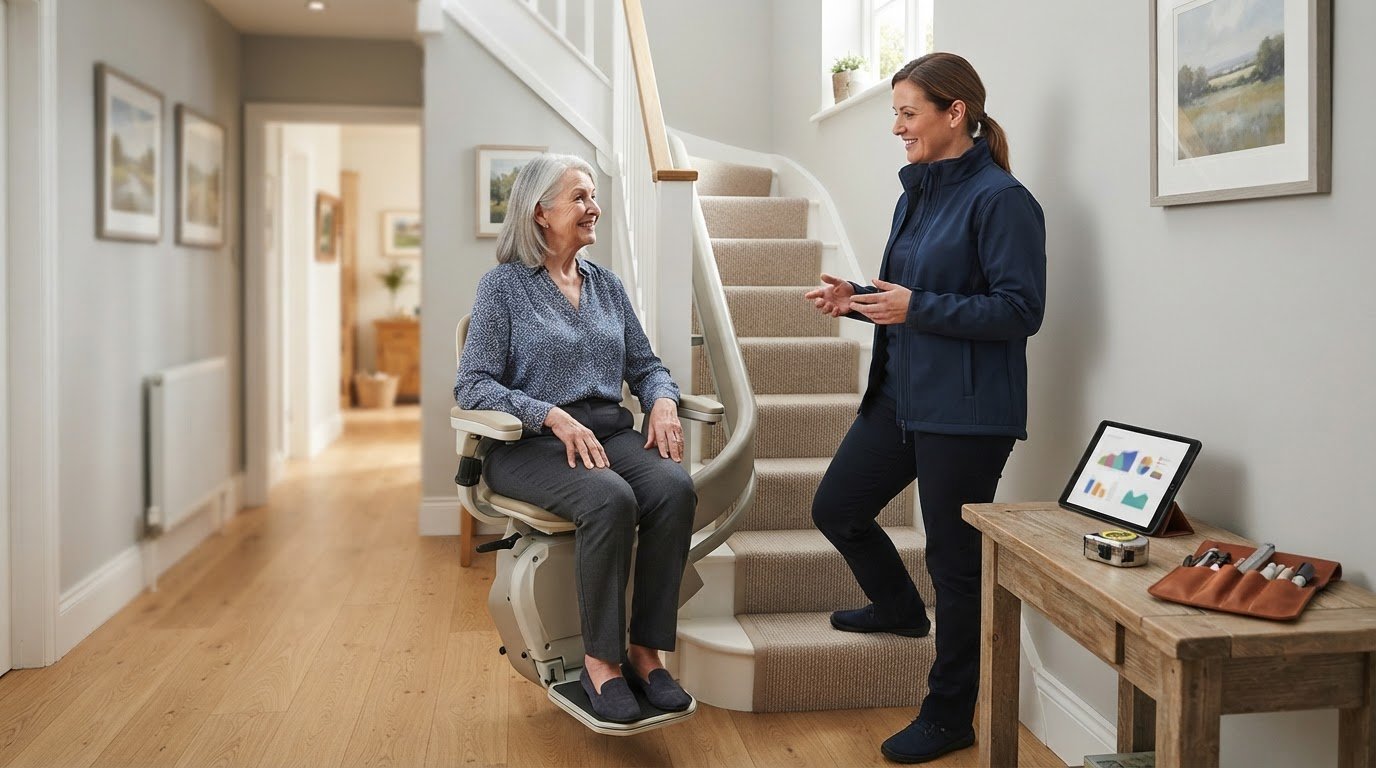
What if a stairlift user is close to or above the stated limit?
Don’t assume a stairlift can safely carry more than its stated maximum load. The rating is a model-specific limit, not a rough guide that can be exceeded because the lift appears to work normally. If you’re concerned that the user may be close to or over the limit, confirm the facts before making a decision. There’s no need to feel uncomfortable asking: capacity and fit are practical questions that deserve a clear answer.
Use this calm sequence:
Check the exact model and current rating in the manufacturer’s documentation. Don’t rely on a category label, an online comparison or information for a different model.
If use beyond the verified limit is suspected, pause use until you’ve received model-specific advice.
Speak privately with the manufacturer or a stairlift professional and ask them to confirm how the documented limit applies.
Ask whether another model could be assessed for the user and the staircase, rather than trying to make the current lift work beyond its stated rating.
Avoid adjustments, modifications or workarounds unless the manufacturer explicitly approves them for that model. A change intended to improve comfort or accommodate a user could affect the lift’s intended use, so don’t rely on informal suggestions or make alterations yourself.
What should you do if the user may exceed the limit?
Confirm the concern confidentially and share only the information needed for a useful answer. Have the exact model details and manufacturer documentation to hand, then ask what the stated limit means for the intended user. If that rating may be exceeded, don’t continue using the lift on the assumption it has extra capacity. Ask for suitable alternatives to be assessed against both the user’s needs and the staircase.
Why is a professional assessment helpful?
A professional assessment can consider the user, staircase, model and proposed installation together. It doesn’t replace the manufacturer’s capacity information; it helps clarify how the documented rating relates to the particular situation. Ask direct questions about load limits, comfort, getting on and off, control access and any conditions listed in the documentation. Don’t assume a model is suitable before these details are checked.
For wider home-safety context, read this guide to stairlift fall-prevention guidance. If you’d like to discuss a capacity concern and the staircase, you can ask ElevatedStairlifts about stairlift installation. The aim is to help you check the specific model and home, without pressure to decide before you have the relevant information.
How to confirm the right stairlift weight capacity in the UK
Make the decision in stages. For stairlift weight capacity UK, the manufacturer’s current documentation is the reference for the exact model’s stated limit. A professional can then help check how that model, the user’s needs, the staircase and the proposed installation fit together. Advice should clarify the specification, not replace it.
Before moving ahead, use this checklist:
Exact model: confirm the full model name and configuration being considered.
Manufacturer-confirmed limit: check the current documentation and ask how the maximum load applies to that configuration.
Comfortable fit: discuss sitting, posture, getting on and off, and reaching the controls.
Staircase assessment: check that the proposed model and rail are appropriate for the staircase.
Installation and support: clarify the installation plan and ask what servicing or breakdown support is available afterwards.
Keep a note of the answers, including where the capacity figure came from. That gives you a clear basis for comparing options and following up on anything that remains uncertain.
Questions to ask before choosing a stairlift
Ask: “What is the exact model, and where can I check its current manufacturer-stated maximum load?” Then ask how the installer will assess the user’s comfort and access, the staircase and the proposed rail. Before agreeing to an installation, find out what servicing or breakdown support is available and who to contact if you need help later.
How to ask for advice without pressure
You can explain relevant needs privately and ask for a straightforward account of what is known, what still needs checking and which document confirms the rating. ElevatedStairlifts installs, services and repairs stairlifts across the UK, and offers installation of the Thyssen Homeglide and Stannah 260. The specific model and its capacity still need to be confirmed against current manufacturer information.
If you’d like to explore the next step, you can request a free, no-obligation quote by sending staircase photos via WhatsApp or email. Photos can help with an initial discussion, while confirmation of the model, capacity and installation plan should be based on the relevant documentation and assessment. For information about installation and support, contact ElevatedStairlifts when you feel ready.
Take the next step with clear information
Choosing a stairlift starts with the exact model, not a general capacity estimate. Check the manufacturer’s current stated limit, then consider whether the seat, access and controls suit the person who’ll use it. A professional assessment can help you review the user, staircase, rail and installation plan together, while the manufacturer’s documentation remains the reference for the rating.
That’s the practical way to approach stairlift weight capacity UK: verify the specification, ask questions if anything is unclear, and don’t assume a lift can exceed its stated limit. It’s entirely reasonable to discuss personal needs privately and take time to understand the options.
ElevatedStairlifts provides UK-wide installation, servicing and breakdown support, including professional installation of the Thyssen Homeglide and Stannah 260. You can request a free, no-obligation quote and send staircase photos via WhatsApp or email. If you’re ready to explore your options, request a free, no-obligation stairlift quote. A clear, unhurried conversation can help you decide what to check next.
Frequently Asked Questions
What is the maximum weight a stairlift can carry in the UK?
There isn’t one maximum that applies to every stairlift in the UK. The permitted load is specified by the manufacturer for each model, so check the current documentation for the exact lift rather than relying on a general online figure. The stairlift weight capacity UK information you need is the rating for the model and configuration being considered. Ask the manufacturer or installer to clarify it if the documentation is unclear.
Is a stairlift safe if the user is close to its weight limit?
Being close to the stated limit doesn’t, by itself, confirm whether a stairlift is suitable. Check the exact model’s current manufacturer documentation and ask how its rating applies to the user and chosen configuration. Comfort and access matter too: consider posture, getting on and off, and reaching the controls. If you’re unsure, seek model-specific advice before deciding, and don’t assume the lift has extra capacity beyond its stated limit.
Can a stairlift carry more than its stated weight capacity?
No. Don’t assume a stairlift can safely carry more than the manufacturer’s stated maximum load, even if it appears to operate normally. The rating is a limit for that particular model, not a suggested target or an estimate. Avoid trying to increase capacity through adjustments or modifications unless the manufacturer explicitly approves them. If the rating may be exceeded, pause use and contact the manufacturer or a qualified stairlift professional for advice.
How do I find the weight capacity of my stairlift?
First identify the exact model, including any configuration details, then consult its current manufacturer documentation for the maximum load. If you can’t find the information, contact the manufacturer or a stairlift professional and ask them to confirm the rating for that specific lift. Don’t rely on a generic category name, an old leaflet or a comparison-site figure without checking its source. Keep a note of the document or confirmation you used.
What happens if a stairlift user is over the stated weight limit?
If you suspect the user may be over the verified limit, don’t continue using the stairlift on the assumption that it can carry more. Check the exact model and manufacturer rating, then seek advice from the manufacturer or a qualified stairlift professional. Ask for any alternative model to be assessed against both the user’s needs and the staircase. Avoid making changes or attempting workarounds unless the manufacturer explicitly approves them.
Does stairlift weight capacity affect which model is right for me?
Yes. The manufacturer’s stated capacity is an essential check, but it doesn’t determine suitability on its own. Consider the model in relation to the user’s comfort, posture, ability to transfer and reach the controls, as well as the staircase and proposed installation. Confirm the rating in current manufacturer documentation, then ask a professional to assess the proposed model and home. This keeps the specification and practical fit distinct.
Do stairlift weight limits change after installation?
Installing a stairlift doesn’t, by itself, change the manufacturer’s stated capacity for that model. Use the current documentation as the reference and don’t assume the limit has increased because the lift has been fitted or appears to work normally. If the stairlift has been altered, damaged or is behaving differently, seek advice before relying on it. Ask the manufacturer or a qualified professional whether it needs checking and follow their model-specific guidance.
Should I choose a heavy-duty stairlift if I am unsure about capacity?
Not without checking the exact model’s specification and whether it suits the user and staircase. “Heavy-duty” is a category label, not proof of a particular maximum load or a comfortable fit. Ask the manufacturer or installer to confirm the current rating and assess seating, access and the proposed installation. You can discuss personal requirements privately; there’s no need to share sensitive information publicly. Choose based on verified information, not assumptions about a label.
Comments